
Short answer: yes. If you’ve been wondering “are almonds healthy for you?” or even “are almonds good for you?”, you’re in the right place. Almonds pack fiber, plant protein, and heart-healthy fats into a small, crunchy package, and the research behind their benefits is solid. Let’s unpack what they do for your heart, blood sugar, energy, and weight, and how to use them in a simple, sustainable way.
Quick Answer: Are Almonds Good For You? Yes—Here’s Why
Nutrient-Dense: Healthy Fats, Fiber, Protein, And Micronutrients
Almonds deliver a powerful combo in each handful:
- Healthy monounsaturated fats that support heart health
- Fiber for steady digestion and a fuller feeling
- About 6 grams of plant protein per ounce to help balance meals
- Vitamin E (a key antioxidant), plus magnesium, potassium, and polyphenols
This mix supports your cells, helps reduce oxidative stress, and keeps energy levels more stable throughout the day.
Big Wins: Heart Health, Blood Sugar Support, And Satiety
Research links regular almond intake with lower LDL (“bad”) cholesterol and better HDL function. Their fiber and fat slow down carb absorption, supporting healthier blood sugar after meals. And because almonds are satisfying, they can help curb cravings and support weight maintenance, without feeling deprived.
What’s Inside: Nutrition Profile And Evidence-Backed Benefits
Heart Health: LDL Cholesterol, HDL Support, And Blood Pressure
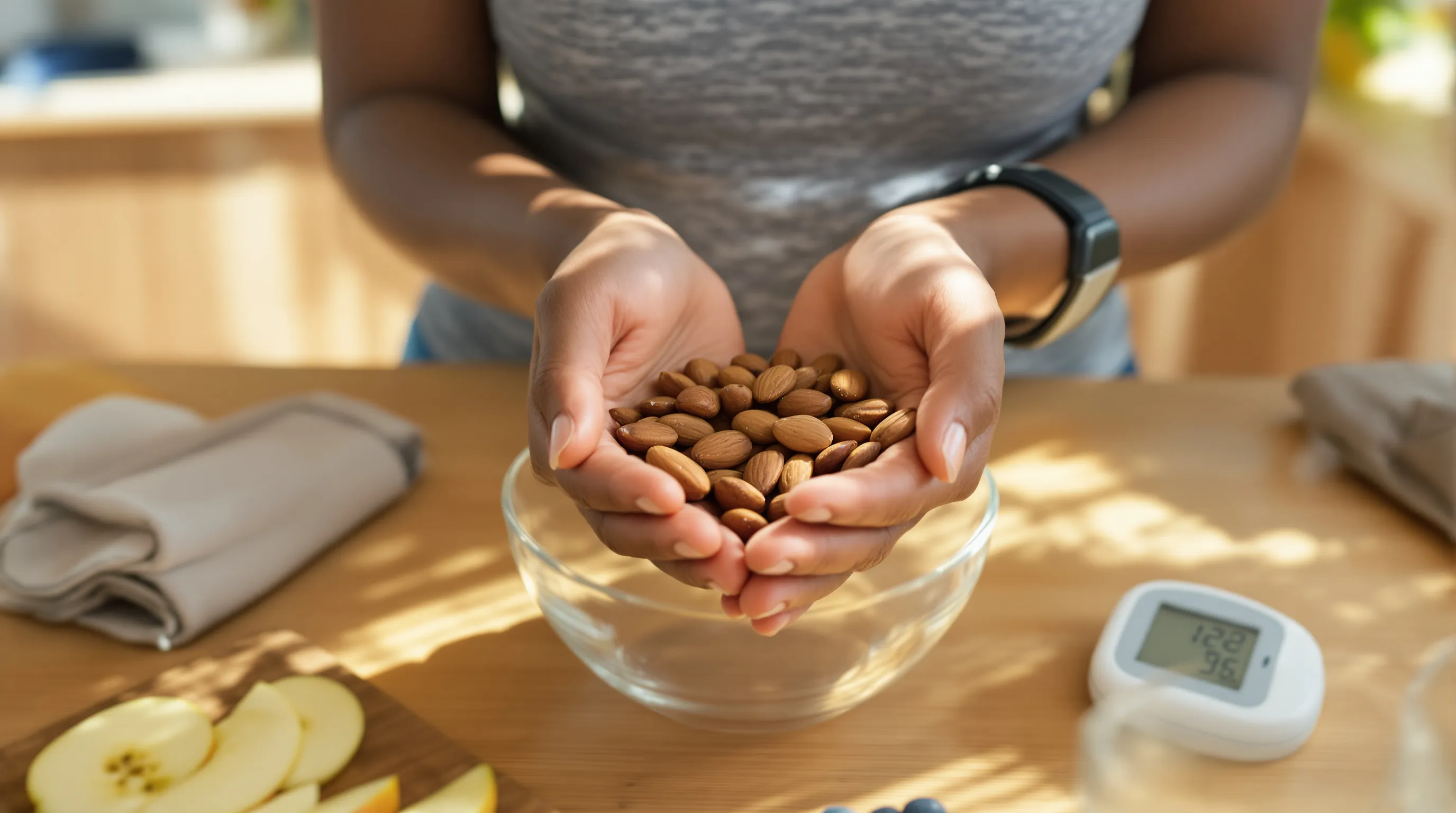
Here’s where almonds really shine. Studies show that even small daily amounts make a difference: about 7 grams of almonds per day is associated with roughly a 1% drop in LDL cholesterol, which maps to an estimated 2% reduction in coronary heart disease risk over time. Eat them at least four times a week and the risk reduction appears stronger.
Antioxidants in almonds, especially vitamin E, help dial down oxidative stress, a driver of artery damage. Almond intake is also linked to improved vascular function and small but meaningful reductions in blood pressure, especially when almonds replace ultra-processed snacks. The takeaway: they’re a simple, realistic lever for long-term heart health.
Steadier Energy: Fiber, Protein, And Lower Glycemic Impact
Almonds have a naturally low glycemic impact. Their mix of fiber, protein, and healthy fats slows gastric emptying and smooths out post-meal blood sugar. In people with type 2 diabetes, almond supplementation has been shown to reduce HbA1c and fasting glucose while improving insulin resistance markers. For everyday energy, that means fewer spikes and dips, and less of the mid-afternoon slump.
Quick tip: Pair a small handful of almonds with fruit to blunt the sugar surge from the fruit and keep you satisfied longer.
Fuller For Longer: Satiety, Gut Health, And Weight Maintenance
Almonds are famously satiating. That fullness effect comes from fiber, protein, and crunchy texture (more chewing signals your brain that you’re eating). People often naturally eat fewer calories later when they include almonds as a snack. Research also suggests almonds may increase beneficial gut bacteria tied to better metabolic health.
Interesting finding: some studies note reductions in abdominal and leg fat with almonds, even when total body weight doesn’t change. Translation: almonds can support healthier body composition over time, especially when they replace refined snacks.
How Much And When To Eat Almonds

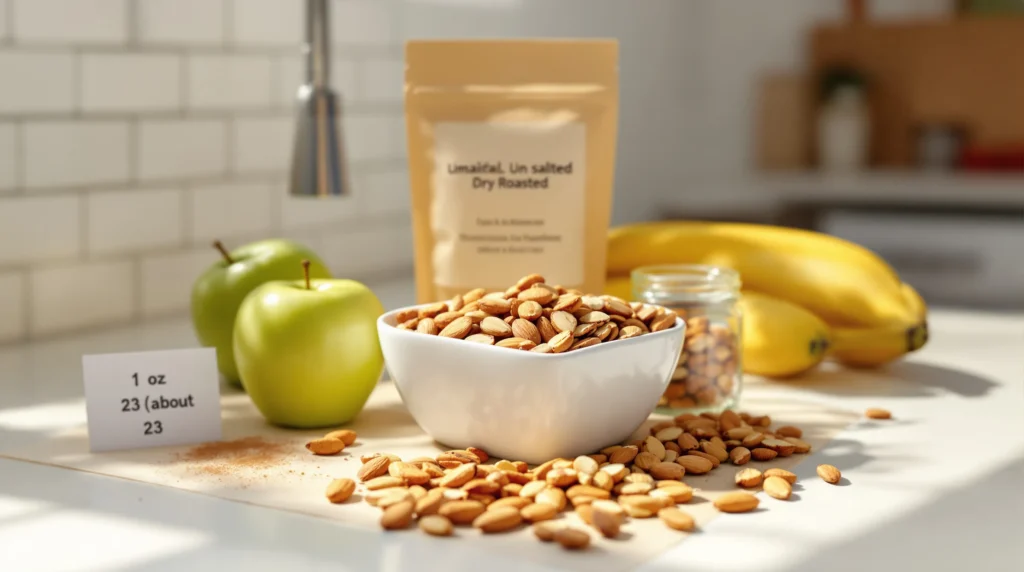
Smart Portions: One Ounce (About 23 Almonds) As A Daily Baseline
A simple starting point is one ounce per day, about 23 almonds. That’s the portion most people can remember and stick to. Research also shows benefits at higher intakes, roughly 42.5 grams per day and up, but start where it feels doable. If you’re working on calorie balance, you can use 10–15 almonds as a light snack and still get meaningful benefits.
Pro move: pre-portion almonds into small containers or snack bags for grab-and-go consistency.
Timing Tips: Snack, Pre-Workout Fuel, Or Meal Add-In
- Mid-morning or afternoon snack: pairs well with a piece of fruit or a yogurt cup.
- Pre-workout: 60–90 minutes before movement, almonds with a banana offer steady fuel without a crash.
- Meal add-in: sprinkle on salads, oats, or grain bowls for crunch, healthy fats, and staying power.
Best Ways To Enjoy Almonds
Raw Vs. Roasted Vs. Soaked: Taste, Texture, And Nutrition Notes
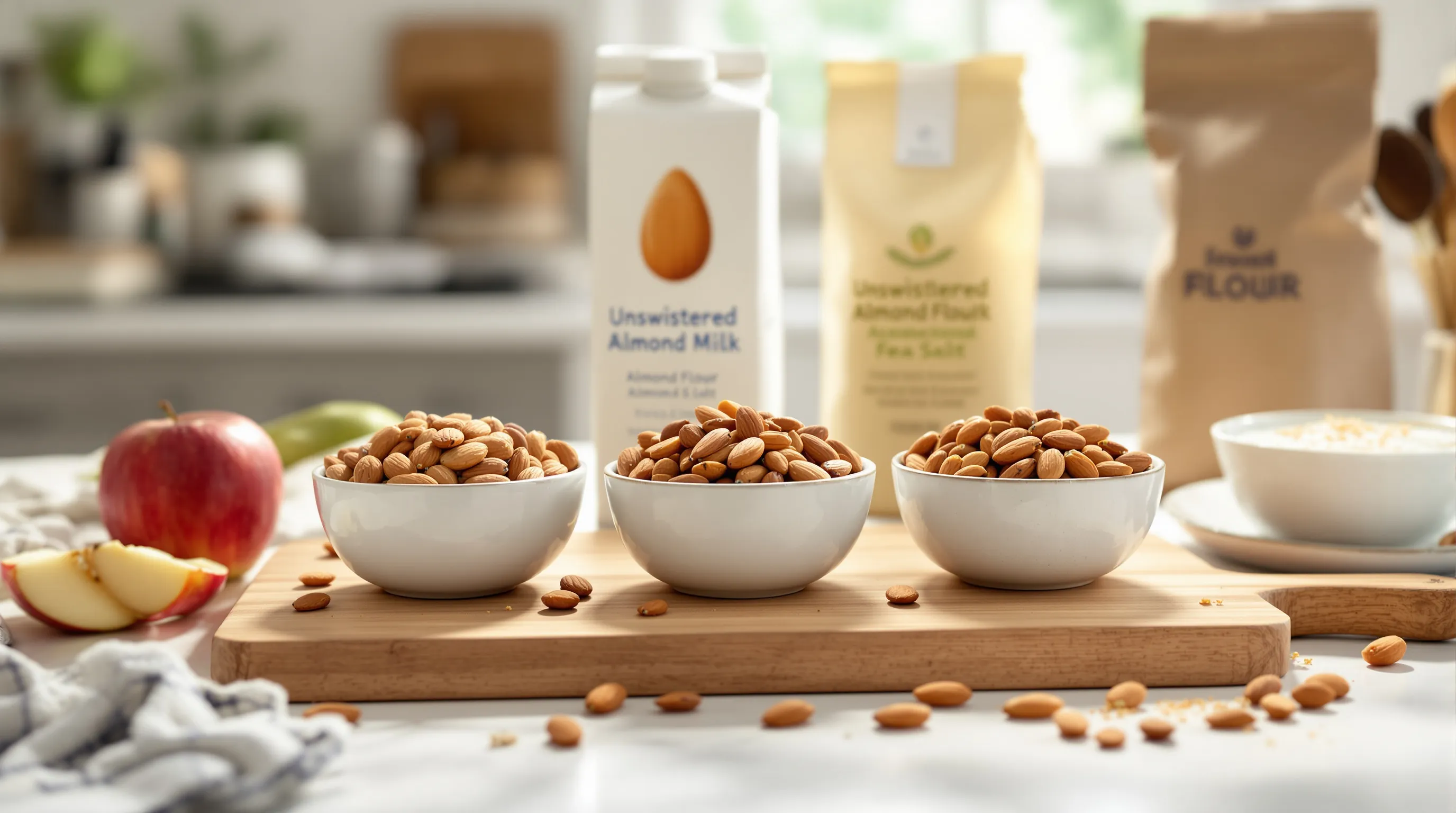
- Raw: mild flavor, soft crunch. Great for baking or blending.
- Dry-roasted: deeper, toasty taste with more crunch, choose unsalted to avoid extra sodium. Nutrients remain strong.
- Soaked/sprouted: softer bite and easier chewing: nutrition is similar overall. Go with what helps you eat them consistently.
If you love them, you’ll eat them. Pick the version you look forward to.
Almond Butter, Milk, And Flour: What To Choose And Why
- Almond butter: look for “almonds” (and maybe salt). Skip added oils and sugars. Two tablespoons supply healthy fats and around 7 grams of protein, nice on toast or apple slices.
- Almond milk: choose unsweetened. It’s light and versatile but lower in protein than dairy or soy: don’t rely on it as your main protein source.
- Almond flour: gluten-free, naturally higher in fat and lower in carbs than wheat flour. Great for baking when you want a tender texture and steadier blood sugar.
Easy Pairings: Fruit, Yogurt, Oats, Salads, And Stir-Fries
- Fruit + almonds: apple, pear, or berries for a balanced snack.
- Yogurt bowl: almonds + cinnamon + a drizzle of honey.
- Oats or overnight oats: chopped almonds for crunch and staying power.
- Salads and grain bowls: sliced or slivered almonds add texture and vitamin E.
- Stir-fries: toss in at the end for a nutty finish without sogginess.
Watch-Outs And Who Should Be Careful

Allergies And Cross-Reactivity: When To Avoid Or Seek Help
If you have a tree nut allergy, skip almonds and talk with your allergist about safe alternatives. Some people with birch pollen allergies can experience oral allergy syndrome (itchy mouth or throat) with raw almonds, roasted may be better, but get personalized guidance.
Added Oils, Sugar, And Sodium: Read Labels And Keep It Simple
Flavored nuts can sneak in seed oils, sweeteners, and lots of salt. Look for short ingredient lists: ideally just almonds (and maybe salt). For almond butter, aim for “almonds” only. For almond milk, unsweetened is your friend.
Oxalates And Kidney Stones: Portion And Variety Matter
Almonds contain oxalates. If you have a history of calcium oxalate kidney stones, talk to your healthcare provider about portions. Many people do well with moderation, hydration, and diet variety. Rotate with other snacks, pistachios, walnuts, pumpkin seeds, or yogurt, to keep things balanced.
Bonus science note: higher intakes of almonds (60+ grams) have been linked to reductions in oxidative stress markers in some studies, but that amount isn’t necessary for everyone. Find your sweet spot.
How To Buy, Store, And Reduce Waste
Labels And Quality: Unsalted, Dry-Roasted, Minimal Ingredients
- Best bet: unsalted, dry-roasted or raw.
- Ingredient list: short and simple, almonds, maybe salt.
- Bulk buying can be cost-effective: just store well to keep them fresh.
Storage And Budget: Keep Them Fresh, Freeze Extras, Buy Smart
- Pantry: airtight container in a cool, dark spot for a few weeks.
- Fridge: extends freshness for a couple of months.
- Freezer: almonds freeze beautifully for up to a year. Freeze in recipe-size portions to minimize thaw/refreeze.
- Save money: shop store brands, buy in bulk during sales, and portion out snacks to avoid over-pouring. Less waste, same crunch.
Conclusion
So, are almonds healthy for you? Absolutely, and the benefits are broader than most snacks can offer: heart-health support, steadier blood sugar, and real satiety, all in a small, easy portion. Start with about a handful a day, choose simple ingredients, and pair them with foods you already love.
If you want more simple, science-backed tips like this, join the HowAboutHealthy.com community. We’ll keep it practical, pressure-free, and doable, one small habit at a time.