
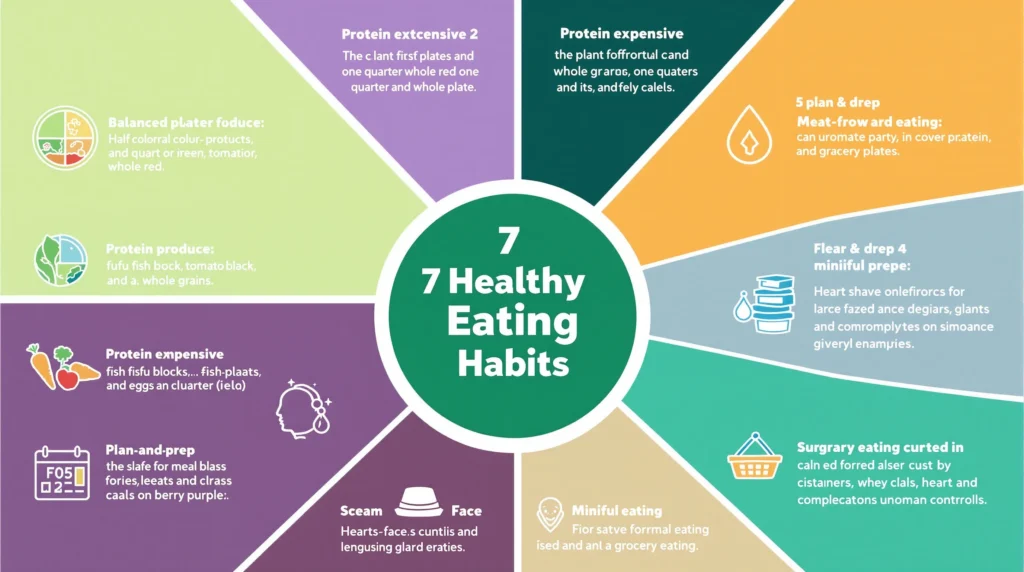
Healthy eating habits don’t have to be rigid or time-consuming. Small, steady choices add up, more energy, fewer crashes, better digestion, and easier weight management. This guide shares seven healthy eating habits you can start today, with simple tools and zero food guilt. Think balanced plates, smart prep, mindful portions, and everyday hydration, practical nutrition guidance you can actually keep up with.
Quick answer for the skimmers: build balanced plates, prioritize protein, fill half your plate with plants, plan once and eat all week, practice mindful eating, hydrate on purpose, and make added sugar/ultra-processed foods the exception. Let’s make healthy eating feel simple.
1. Build Balanced Plates With Protein, Fiber-Rich Carbs, and Healthy Fats
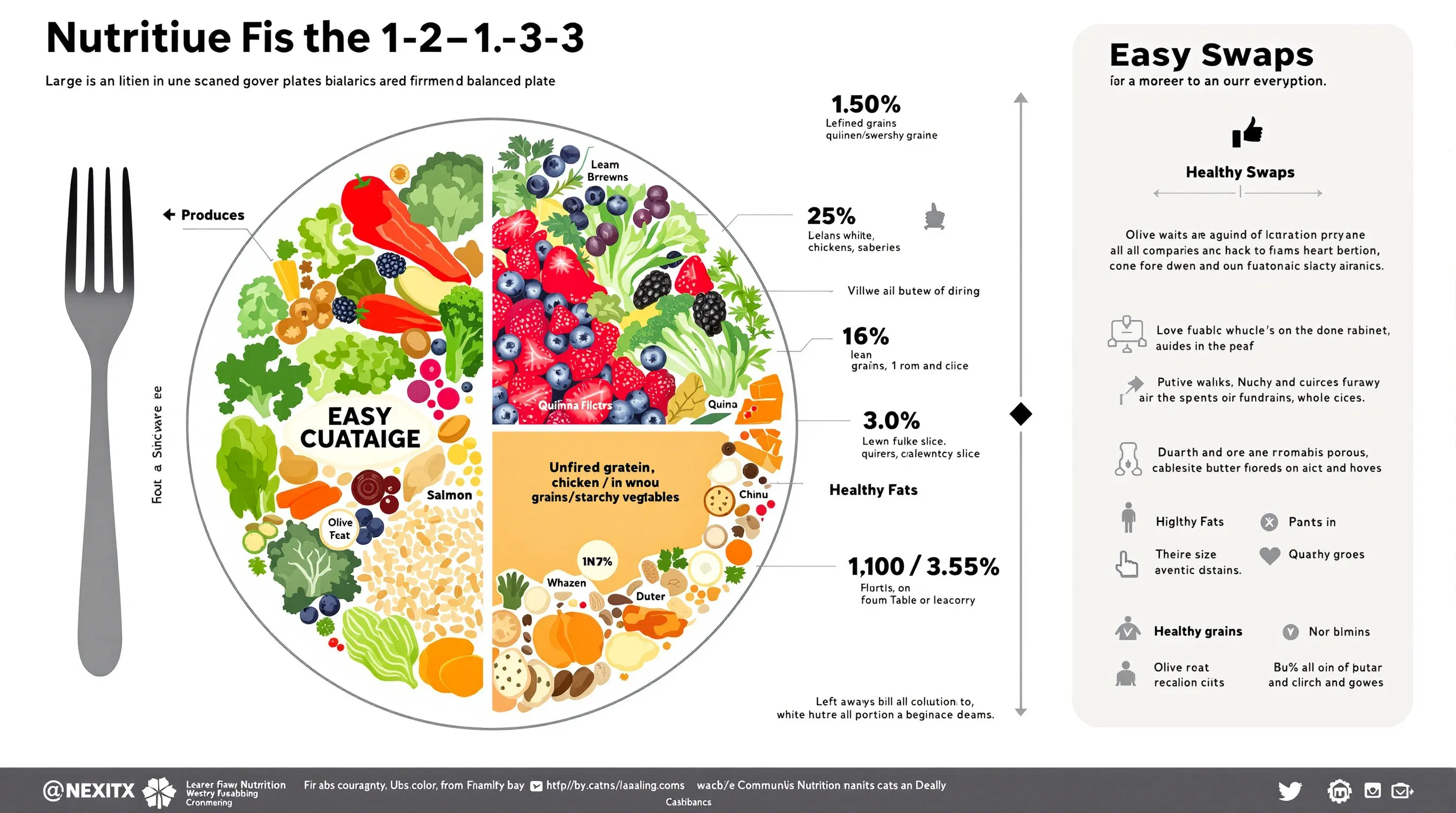
The 1–2–3 Plate Formula (Protein, Produce, Carbs/Fats)
A balanced plate is an easy visual: half produce, a quarter protein, a quarter smart carbs, with healthy fats worked in. This structure steadies energy, supports muscle, and keeps you full without counting every bite.
Try the 1–2–3 formula:
- 50% vegetables and fruits: Colorful, high-fiber produce fills you up and packs vitamins and minerals.
- 25% whole grains or starchy veggies: Brown rice, quinoa, oats, farro, sweet potato, slow-burning carbs for steady energy.
- 25% lean protein: Fish, poultry, tofu, beans, Greek yogurt, or eggs for repair and fullness.
- Add healthy fats: Olive oil, avocado, nuts, seeds, use a thumb-sized drizzle or sprinkle.
Real-life example: Build a bowl with mixed greens + roasted broccoli (50%), quinoa (25%), grilled salmon (25%), and a lemon-olive oil drizzle. Simple, satisfying.
Easy Swaps to Balance Your Go-To Meals
- Swap refined grains for whole grains: white rice → brown rice: regular pasta → whole wheat or chickpea.
- Trade heavy red meat a few nights for fish, beans, or lentils.
- Use olive oil instead of butter for cooking: try avocado instead of creamy spreads.
- Upgrade snacks: chips → apple + peanut butter: pastries → Greek yogurt with berries.
These micro-swaps maintain comfort-food vibes while boosting fiber, protein, and healthy fats, healthy eating habits without losing flavor.
2. Prioritize Protein at Every Meal and Snack
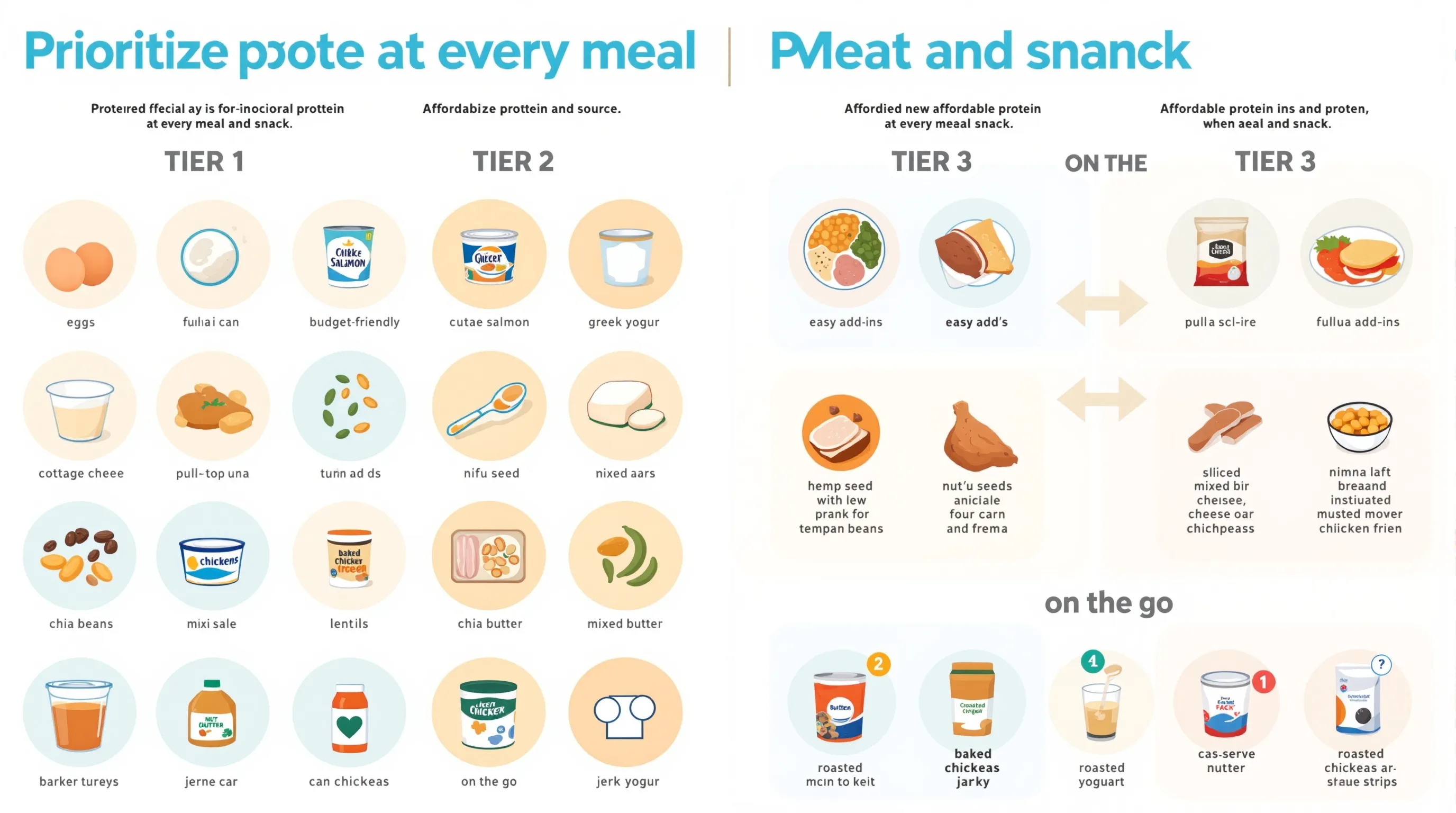
Quick, Affordable Protein Sources
Protein supports muscle repair, appetite control, and steady energy. You don’t need fancy powders to get enough:
- Budget-friendly: eggs, canned tuna or salmon, cottage cheese, Greek yogurt, edamame, tofu, tempeh, beans, and lentils.
- Easy add-ins: hemp seeds, chia seeds, nut butters, sliced turkey, baked chicken thighs, canned chickpeas.
- On the go: protein-rich snack packs (nuts + cheese), roasted chickpeas, jerky, or a yogurt cup.
Example: a quick breakfast, scramble two eggs, add spinach, and pair with whole-grain toast.
Portion Guide You Can Eyeball
Aim for roughly a quarter plate of protein at meals. For many adults, that’s about 20–35 grams per meal (roughly a palm to palm-and-a-half of chicken, tofu, or fish: 1 cup Greek yogurt: or 1 cup cooked beans). Snacks? Include 10–15 grams, think yogurt, a hard-boiled egg, or crackers with hummus. Consistency beats perfection.
3. Fill Half Your Plate With Plants for Fiber and Micronutrients
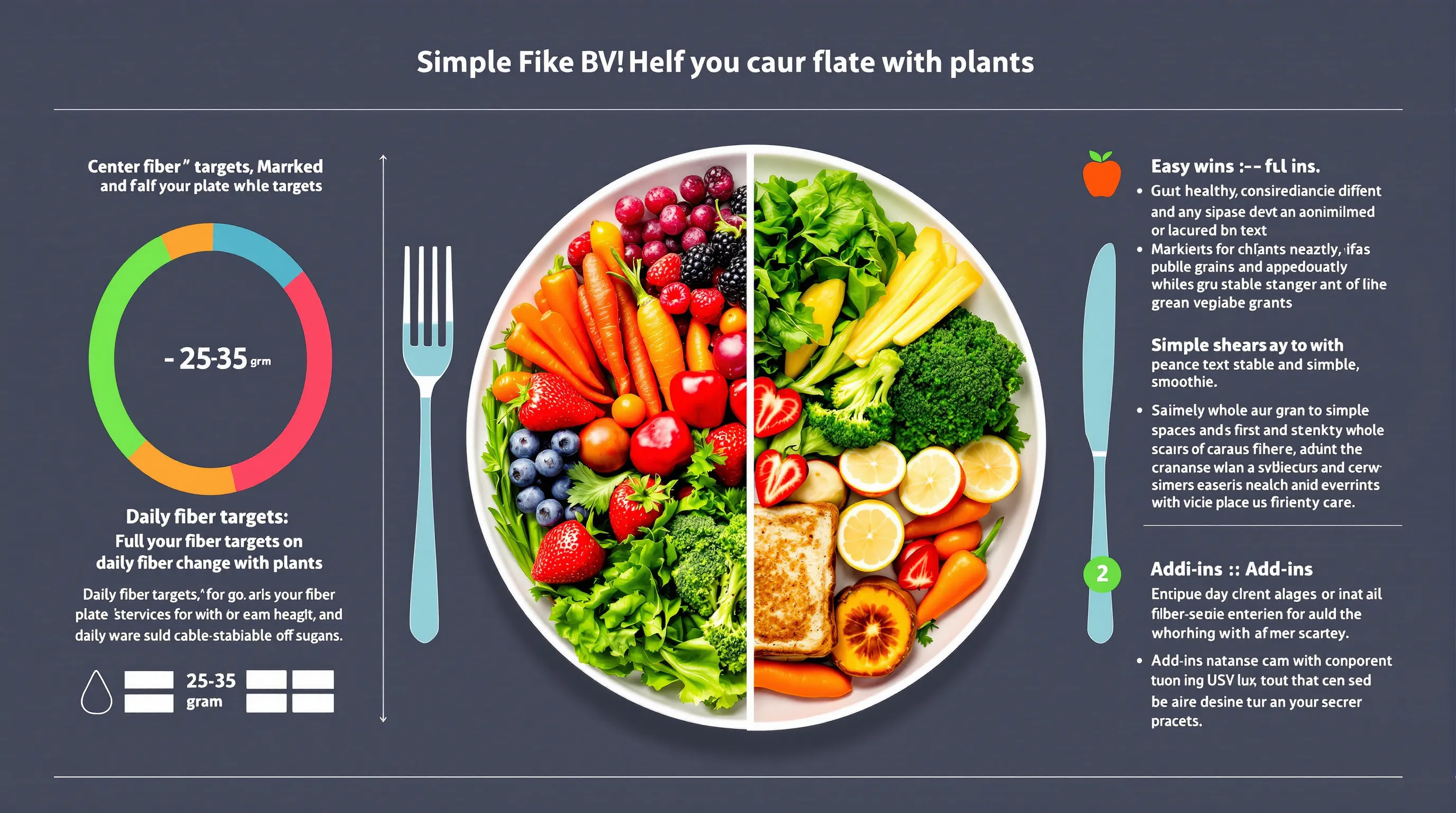
Daily Fiber Targets and Simple Wins
Most adults do well with 25–35 grams of fiber a day. Fiber supports gut health, helps manage appetite, and keeps blood sugar steadier. Easy fiber wins:
- Add a cup of berries to breakfast.
- Toss a handful of greens into eggs or smoothies.
- Choose a whole-grain bread with ≥3g fiber per slice.
- Keep a veggie tray in the fridge for snacking.
Add-Ins That Boost Veggies Without Extra Work
- Stir-ins: frozen spinach in sauces and soups, riced cauliflower in grains, shredded carrots in meatballs or lentil mixes.
- Sheet-pan magic: roast a big batch of broccoli, peppers, and zucchini on Sunday, use all week in bowls, tacos, and omelets.
- Pair with protein: snack on bell pepper strips with cottage cheese or hummus.
Healthy eating habits stick when veggies are prepped and ready. Make the easy choice the default.
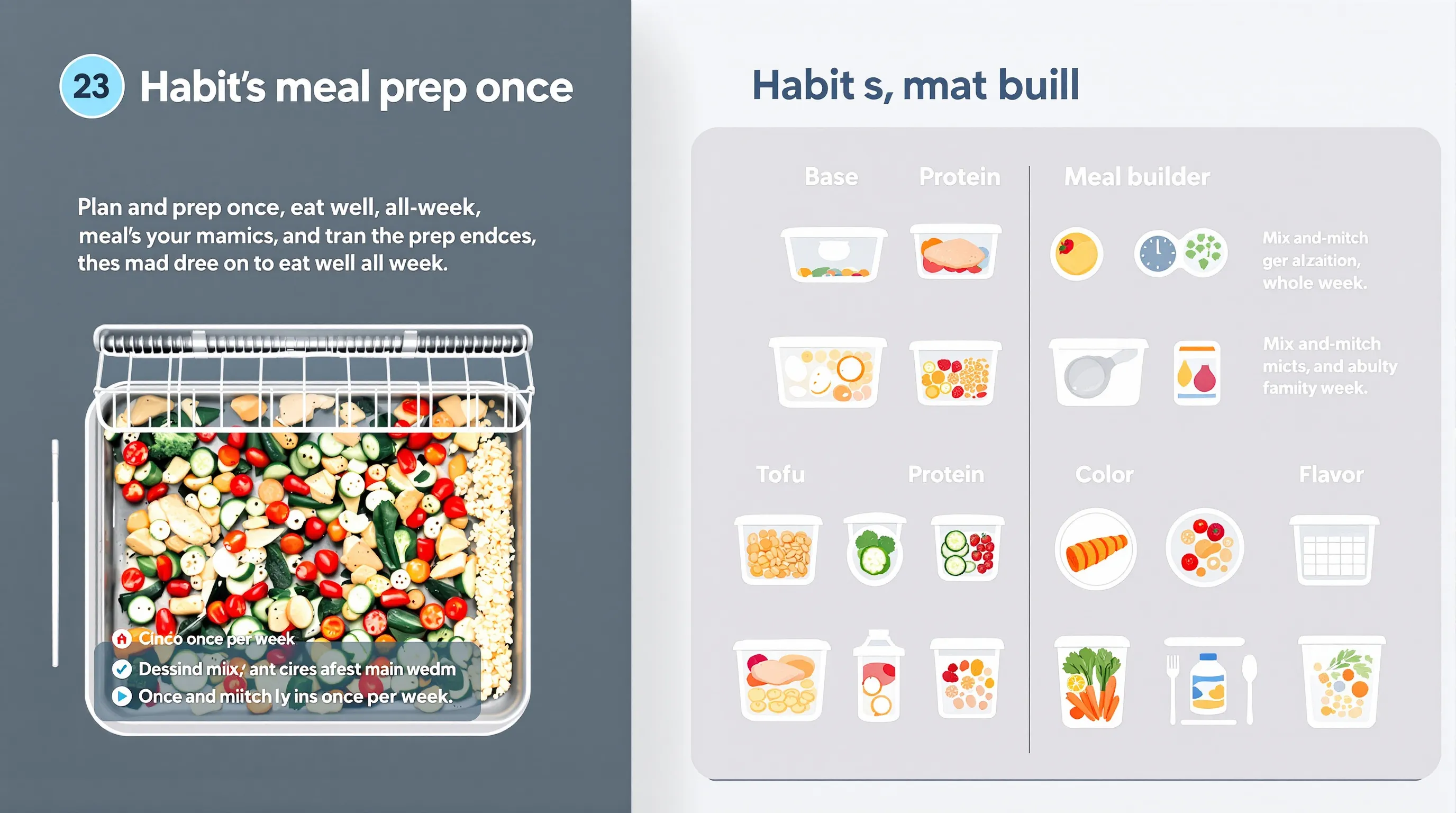
4. Plan and Prep Once, Eat Well All Week
10-Minute Meal Templates
Batch the basics once, then mix-and-match:
- Base: cooked whole grains (quinoa, brown rice, farro) or pre-washed greens.
- Protein: roasted chicken thighs, baked tofu, boiled eggs, canned beans.
- Color: roasted or raw veggies: add a fruit on the side.
- Flavor: olive oil, vinaigrette, salsa, pesto, or tahini sauce.
Templates you can build in minutes:
- Grain bowl: grain + protein + 2 veggies + sauce.
- Quick tacos: beans or fish + slaw + avocado + salsa.
- Protein salad: greens + protein + seeds + chopped veggie + dressing.
Smart Grocery List Basics
Keep a short, reliable list that fuels your week:
- Non-starchy veggies: leafy greens, broccoli, peppers, cucumbers.
- Lean proteins: chicken, fish, eggs, tofu/tempeh, Greek yogurt, beans.
- Whole grains/starchy veg: oats, brown rice, quinoa, potatoes, corn, whole-grain wraps.
- Healthy extras: olive oil, nuts, seeds, herbs, lemons/limes, frozen fruit/veg.
This is practical nutrition guidance you can reuse week after week, fast, flexible, and budget-conscious.
5. Practice Mindful Eating and Portion Awareness
Hunger and Fullness Cues to Notice
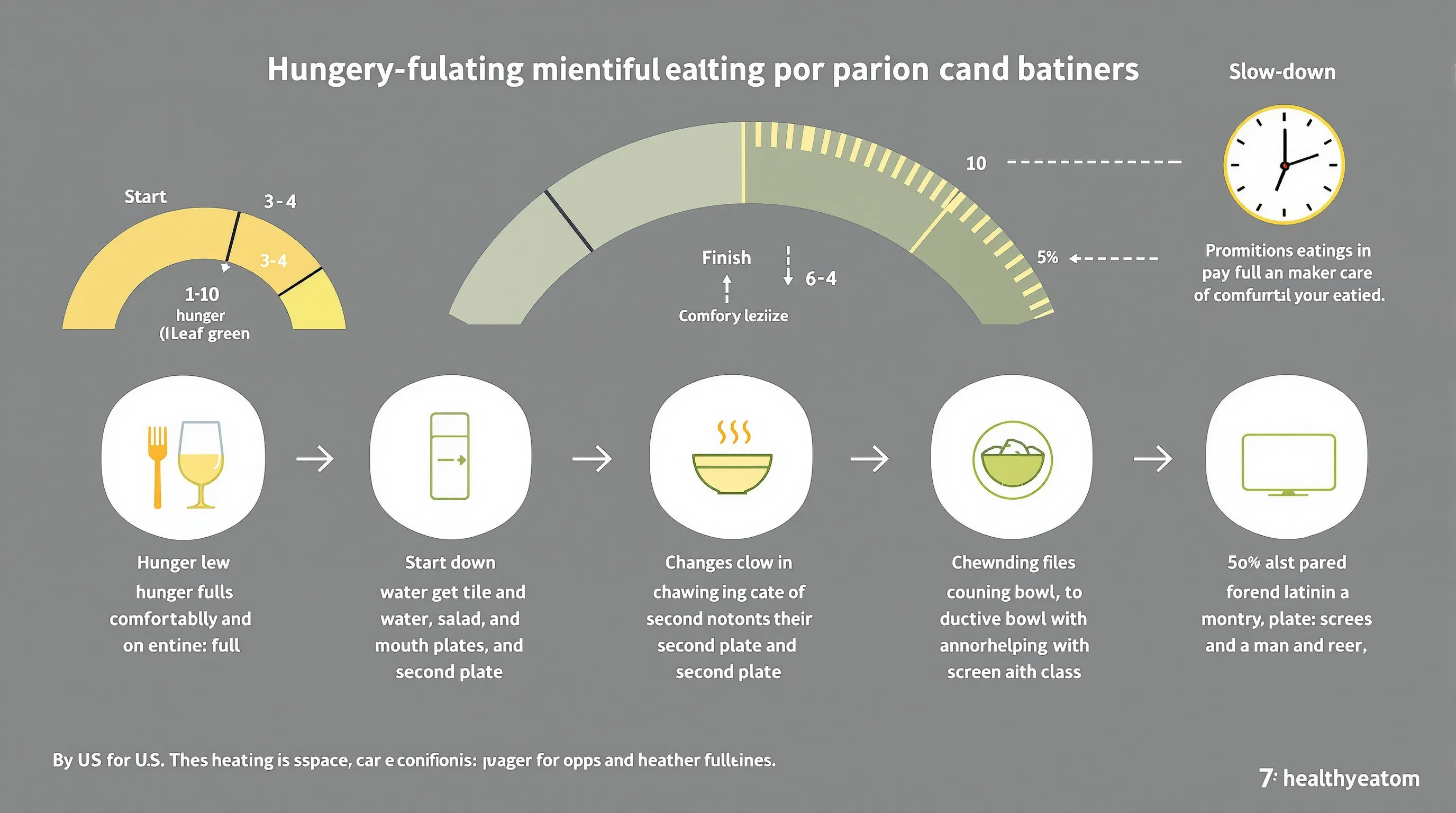
Mindful eating helps you reconnect to your body’s signals. Pause before you eat: How hungry are you on a 1–10 scale? Aim to start around a gentle 3–4 and finish around a comfortable 6–7. Remember, fullness can lag by ~20 minutes, so slower bites help your brain catch up to your stomach.
Slow-Down Strategies That Actually Stick
- Put the fork down between bites: take a sip of water.
- Chew more, try 2–3 extra chews per bite.
- Start meals with veggies or a side salad to pace yourself.
- Serve modest portions: you can always go back for more.
- Eat without screens for at least the first 10 minutes.
Real talk: didn’t nail it today? No big deal. Tomorrow’s a new chance, healthy eating habits are about trends, not one meal.
6. Hydrate Strategically for Energy, Digestion, and Appetite
How Much Water You Really Need
A simple target is eight 8-ounce glasses a day (about 2 liters). Needs vary with size, activity, climate, and pregnancy/breastfeeding. Use bathroom checks and energy levels as real-world guides: pale yellow urine and fewer afternoon slumps usually mean you’re on track. Try a glass of water when you wake up and another before meals to help curb overeating and support digestion.
Flavor Boosters That Keep You Drinking
Plain water isn’t your only option:
- Add slices of lemon, lime, orange, or cucumber.
- Toss in fresh mint, basil, or ginger.
- Use a splash of 100% fruit juice or unsweetened iced tea.
- Try sparkling water with a squeeze of citrus.
Pro tip: keep a reusable bottle within reach. You’ll sip more without thinking.
7. Make Added Sugar and Ultra-Processed Foods the Exception
Label Reading in 10 Seconds
Turn the package over. Scan ingredients: the shorter and more recognizable, the better. For added sugar, look for terms like sugar, syrup, honey, agave, dextrose, or fructose. Check “Added Sugars” on the Nutrition Facts, aim low most days. If sugar is a top-three ingredient, consider a swap.
Sweet Tooth Strategies That Satisfy
Cravings happen. You don’t need perfection, just upgrades:
- Choose whole fruit first: apples with almond butter, berries with yogurt.
- Keep nuts and dark chocolate (70%+) on hand for a smarter sweet bite.
- Bake at home with less sugar: lean on cinnamon, vanilla, or citrus zest for flavor.
- Pick drinks like water, sparkling water, or unsweetened tea instead of sugary beverages.
Whole-food focus is the core of healthy eating habits, treats are fine, just not the main event.
Conclusion
Healthy eating habits are about simple systems that repeat: build balanced plates, include protein, load up on plants, plan once to glide through the week, eat mindfully, hydrate, and keep added sugars and ultra-processed foods in the “sometimes” lane. Together, these strategies boost energy, support weight management, and make digestion and mood more predictable, without strict rules.
Pick one habit to start today. Maybe it’s the 1–2–3 plate at dinner or prepping a protein and two veggies on Sunday. Then stack another next week. That’s how sustainable change happens, small, consistent steps that fit your life.
Want more practical wellness tips and healthy recipes? Visit howabouthealthy.com and join our wellness community for monthly, doable guidance that helps you feel your best.