

If you’ve been curious about strength training but feel overwhelmed by complicated programs, you’re not alone. We’re here to make it simple. Strength training for beginners doesn’t require fancy gear, long workouts, or a hardcore mindset. It just needs smart basics, a plan you can stick to, and a calm, steady approach. Let’s build strength, energy, and confidence, one doable session at a time.
Why Strength Training Matters For Health, Energy, And Longevity

Think of strength as a daily advantage. Strong muscles make stairs easy, groceries lighter, and weekend plans more fun. The benefits reach far beyond the mirror:
- Supports healthy metabolism and body composition by preserving and building lean muscle.
- Improves insulin sensitivity and blood sugar control.
- Boosts bone density and reduces risk of falls as we age.
- Helps lower blood pressure and chronic disease risk.
- Lifts mood and reduces stress, resistance training is linked with better mental wellbeing.
This isn’t about extremes. Two to three short full-body sessions a week can improve energy, posture, mobility, and longevity at any age. Research from organizations like the American College of Sports Medicine and CDC aligns on this: consistent strength work, paired with daily movement, is one of the highest-return habits we can build. And yes, beginners see results quickly, especially in the first 4–8 weeks as your brain and muscles learn to work together.
The Basics: How Strength Training Works
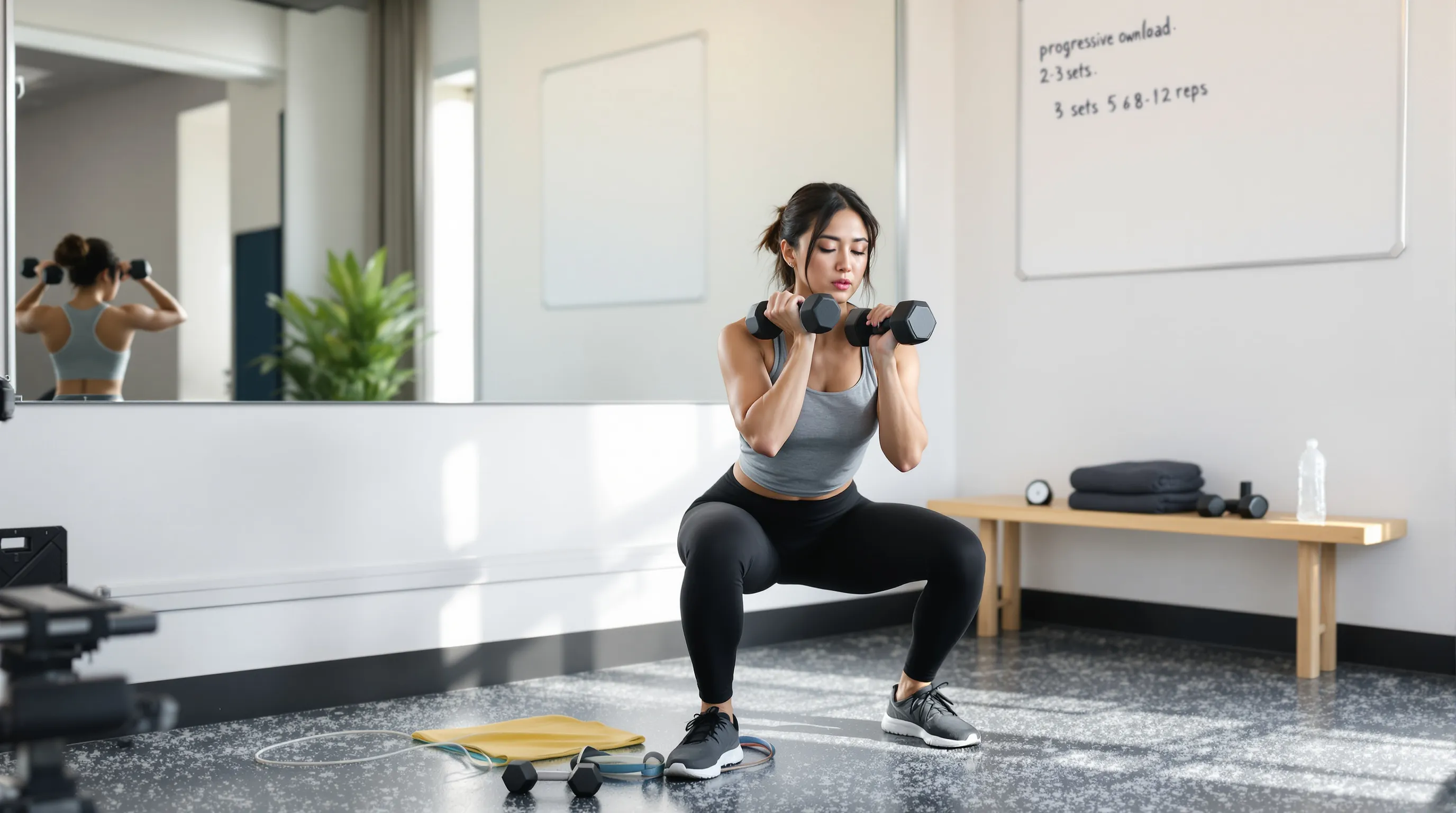
Strength training challenges your muscles with resistance (bodyweight, bands, dumbbells). That stress creates tiny muscle-fiber damage, which repairs a bit stronger, a process called hypertrophy. The golden rule is progressive overload: we gradually increase the challenge with a little more weight, a few more reps, a slower tempo, or a tougher variation.
For strength training for beginners, form comes first. We aim for full but pain-free range of motion, a steady pace, and smooth breathing. Two to three sets of 8–12 reps per move is a proven sweet spot to build strength and muscle when you’re starting out.
Your Starter Plan: Two Full-Body Workouts Per Week
Let’s keep it simple and effective. We’ll train all major muscle groups on two non-consecutive days (e.g., Monday/Thursday). Each session takes ~20–30 minutes.
Warm-Up And Setup
- 5–10 minutes easy cardio (walk, cycle, or marching in place)
- Dynamic moves: arm circles, leg swings, hip circles
- One light practice set for your first exercise
This wakes up your joints and increases blood flow so lifts feel smoother.
Workout A: Push, Hinge, Core
- Push: Wall or knee push-ups, 1–3 sets of 8–12 reps
- Hinge: Hip hinge drill, then dumbbell deadlift, 1–3 x 8–12
- Core: Forearm plank, 1–3 x 10–30+ seconds
Rest 30–60 seconds between sets. Focus on a neutral spine and firm midsection. With deadlifts, keep the weight close to your legs and drive through your hips.
Workout B: Squat, Pull, Carry
- Squat: Chair or bodyweight squats, 1–3 x 8–12
- Pull: Band or dumbbell row, 1–3 x 8–12 per side
- Carry: Farmer’s carry (dumbbells), 1–3 x 20–40 seconds
Again, rest 30–60 seconds between sets. Rows balance all the pushing we do daily. The carry trains grip, core, and posture in one efficient move.
Perform 2–3 rounds of each workout. If you’re short on time, do one round well, it still counts.
Progression: When And How To Add Challenge
Add a bit of difficulty once you hit the top of your rep range with good form. Options:
- Add 2–5 lb per dumbbell
- Add 1–2 reps per set (up to 12)
- Slow the lowering phase to 3–4 seconds
- Choose a slightly harder variation (wall to knee push-up, chair to parallel squat)
Small steps, weekly or biweekly, keep you progressing without overdoing it.
Technique And Safety Essentials
Good form protects your joints and makes every rep count. A few key cues go a long way.
Bracing And Neutral Spine
- Brace: Gently tighten your abs like you’re about to cough. Keep ribs stacked over hips.
- Neutral spine: Maintain the natural curves of your back. Avoid rounding or excessive arching, especially during hinges and squats.
- Foot pressure: Tripod stance, big toe, little toe, heel pressed into the floor.
Tempo, Range Of Motion, And Breathing
- Tempo: Move with control, 2 seconds down, 1 second up is a great start.
- Range: Full but pain-free. If a joint feels pinchy, shorten the range and rebuild.
- Breathing: Exhale on the effort (press, stand, pull). Inhale on the easier phase.
Common Form Pitfalls And Quick Fixes
- Rounded back in deadlifts? Lighten the load, hinge from hips, keep weights close to shins.
- Knees collapsing inward on squats? Press knees slightly out: reduce depth and strengthen glutes.
- Shrugging during rows/push-ups? Relax shoulders down and back: think “proud chest.”
- Speeding through reps? Slow down. Quality beats quantity every time.
Recovery, Nutrition, And Tracking Progress
Progress happens between workouts. Recovery and fueling make your training stick.
Protein, Hydration, And Simple Fueling
- Aim for a protein source at each meal (eggs, Greek yogurt, tofu, fish, chicken, beans). Many beginners do well with ~20–30 g per meal.
- Hydrate through the day. Add a pinch of sea salt if you sweat heavily.
- Pre-workout: a light snack with carbs + protein 60–90 minutes before can boost energy (banana + yogurt, toast + peanut butter).
Sleep, Rest Days, And Mobility
- Sleep 7–9 hours when you can: it’s prime time for recovery and hormone balance.
- Plan rest days between strength sessions. Easy walks and gentle mobility keep you loose.
What To Track: Loads, Reps, And How You Feel
- Record exercises, sets, reps, and weights. Note perceived effort (easy, medium, hard).
- Celebrate small wins: an extra rep, better form, faster recovery, deeper sleep.
- If soreness lingers >72 hours or energy tanks, reduce volume, add recovery, and progress more gradually.
Make It Stick In A Busy Week
Consistency beats perfection. Here’s how we keep it doable.
Time-Savers: Short Sessions And Supersets
- 20–30 minutes is enough. Set a timer.
- Use supersets: alternate two moves (e.g., squats and rows) with short rests. You’ll get more done without feeling rushed.
- Try micro-sessions: 10 minutes in the morning + 10 minutes after work.
Home Vs. Gym: Minimal Gear Options
Home works great:
- Bodyweight basics, a light pair of dumbbells (5–20 lb), and a medium resistance band cover all moves.
- No weights? Use a backpack loaded with books for deadlifts and carries.
Gym perks:
- More weight options and machines for guided movement. Both paths are valid, choose what helps you show up.
Mindset: Start Small, Stay Consistent
- Think “always something” instead of “all or nothing.” One round still counts.
- Progress isn’t linear. Some days will feel flat, no big deal. Tomorrow’s a new chance.
- Anchor your workouts to routines: after morning coffee, during a lunch break, or before dinner.
Tiny wins compound. That’s how long-term strength is built.
Conclusion
Strength training for beginners can be simple, safe, and surprisingly energizing. Two full-body workouts a week, steady progression, and kind consistency will move the needle on strength, mobility, metabolism, and mood, without taking over your life.
If you want more practical, science-backed tips like this, join us at howabouthealthy.com. Let’s make healthy living feel simple, and keep it going for the long run.