

Short answer: yes, pomegranates are good for you. The ruby-red arils pack fiber, vitamin C, potassium, and standout antioxidants like punicalagins and anthocyanins that support heart, metabolic, and brain health. If you’ve wondered “are pomegranates good for you?” or simply want easy ways to use them, this guide breaks it down, no jargon, just practical tips you can try today. At HowAboutHealthy.com, we keep wellness simple and doable. Let’s make this fruit work for your real life.
What Makes Pomegranates A Healthy Pick
Quick Nutrition Snapshot
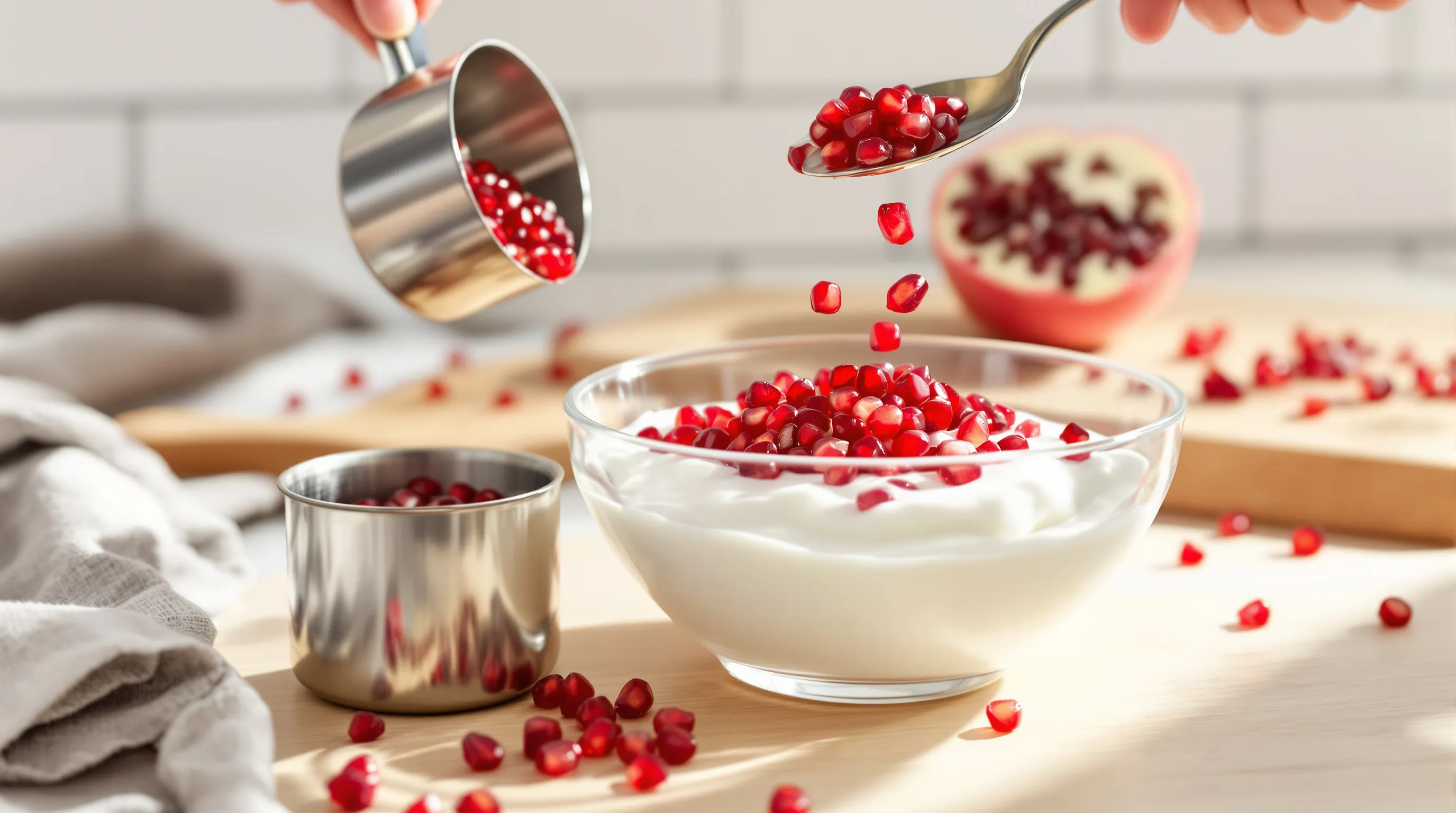
- Per 1/2 cup arils (approx.): about 70–80 calories, ~3.5–4 g fiber, ~16 g carbs, naturally occurring sugars, small amounts of protein and fat.
- Micronutrients: vitamin C, vitamin K, and potassium in meaningful amounts.
- Big picture: nutrient-dense with fiber and antioxidants, yet relatively low in calories, easy to fold into a balanced day.
That fiber matters. It helps with fullness and steadier energy, and it supports gut health. Pairing pomegranate arils with protein or yogurt can make a surprisingly satisfying snack that still feels light.
Antioxidants You Can Actually Use (Punicalagins, Anthocyanins)
Pomegranates are loaded with polyphenols, especially punicalagins and other ellagitannins, plus anthocyanins (the pigments that give that jewel tone). In lab and small human studies, these compounds show strong antioxidant and anti‑inflammatory actions, often rivaling or surpassing well-known sources like red wine and green tea. Translation: they help counter oxidative stress, which is tied to heart health, recovery, and long-term wellness. You’re not chasing a miracle: you’re giving your body more tools to handle daily wear and tear.
Evidence-Backed Benefits

Heart And Blood Pressure Support
Pomegranate polyphenols may help reduce oxidative stress in blood vessels and curb LDL oxidation, two steps linked to slower plaque buildup. Some trials report modest improvements in blood pressure when people drink pomegranate juice regularly. It’s not a replacement for prescribed treatment, but it can be a supportive habit alongside movement, sleep, and stress care. Simple move: add 4–8 oz of 100% pomegranate juice to lunch a few days a week, or toss 1/2 cup arils on a grain bowl.
How it helps day-to-day: better endothelial function (how your vessels relax and contract) can translate to smoother workouts and steadier energy. It’s subtle, not showy, consistency is what counts.
Inflammation, Recovery, And Immune Health
Those same polyphenols can dial down inflammatory pathways (think NF‑κB signaling) and ease markers like CRP and IL‑6 in some studies. If you train hard or you’re on your feet all day, that anti‑inflammatory nudge might help with soreness and post‑exercise oxidative stress. Small studies using pomegranate peel or extract show benefits for recovery windows and comfort.
Immune-wise, vitamin C plus polyphenols offer gentle support, especially during colder months. Don’t expect a force field: do expect another piece of your resilience puzzle. Try adding arils to a citrus salad, or stir them into warm quinoa with herbs for a savory, soothing side after workouts.
Metabolic And Brain Support
Early research (mostly small trials) suggests pomegranate extracts can support healthier glucose responses, lipids, and inflammatory markers. In everyday terms: choosing pomegranate arils over a lower-fiber sweet snack may help steady energy and cut mindless nibbling.
On the brain front, pomegranate juice and extracts have shown signals for memory support and protection against oxidative stress in preliminary studies. If you stare at a screen all day or juggle a busy schedule, a daily polyphenol boost is a low-lift bet. A simple routine: 1/2 cup arils with Greek yogurt in the afternoon, protein for satiety, antioxidants for brain and vascular support.
Seeds, Juice, Or Supplements: What’s Best?
Fiber And Sugar Trade-Offs
- Arils (seeds): come with fiber, which slows absorption and supports gut health. Great texture, satisfying pop.
- Juice: higher in natural sugars, no fiber, but still concentrated in polyphenols. Stick to ~4–8 oz and pair with a meal or protein for balance.
If you enjoy chewing and want fullness, arils win. If you prefer a quick pour or need an easy pre‑workout carb, juice is fine, just mind portions.
When A Supplement Might Make Sense
Most studies that target specific outcomes (metabolic health, inflammation, athletic recovery) use standardized pomegranate extracts. These can be useful for short-term goals or when dietary intake is inconsistent. If you’re on multiple medications or have a medical condition, talk with your clinician first. Food-first is a safe default: supplements can be a strategic tool with professional guidance.
How Much To Eat And Easy Ways To Add Them
Simple Portions For Everyday Life
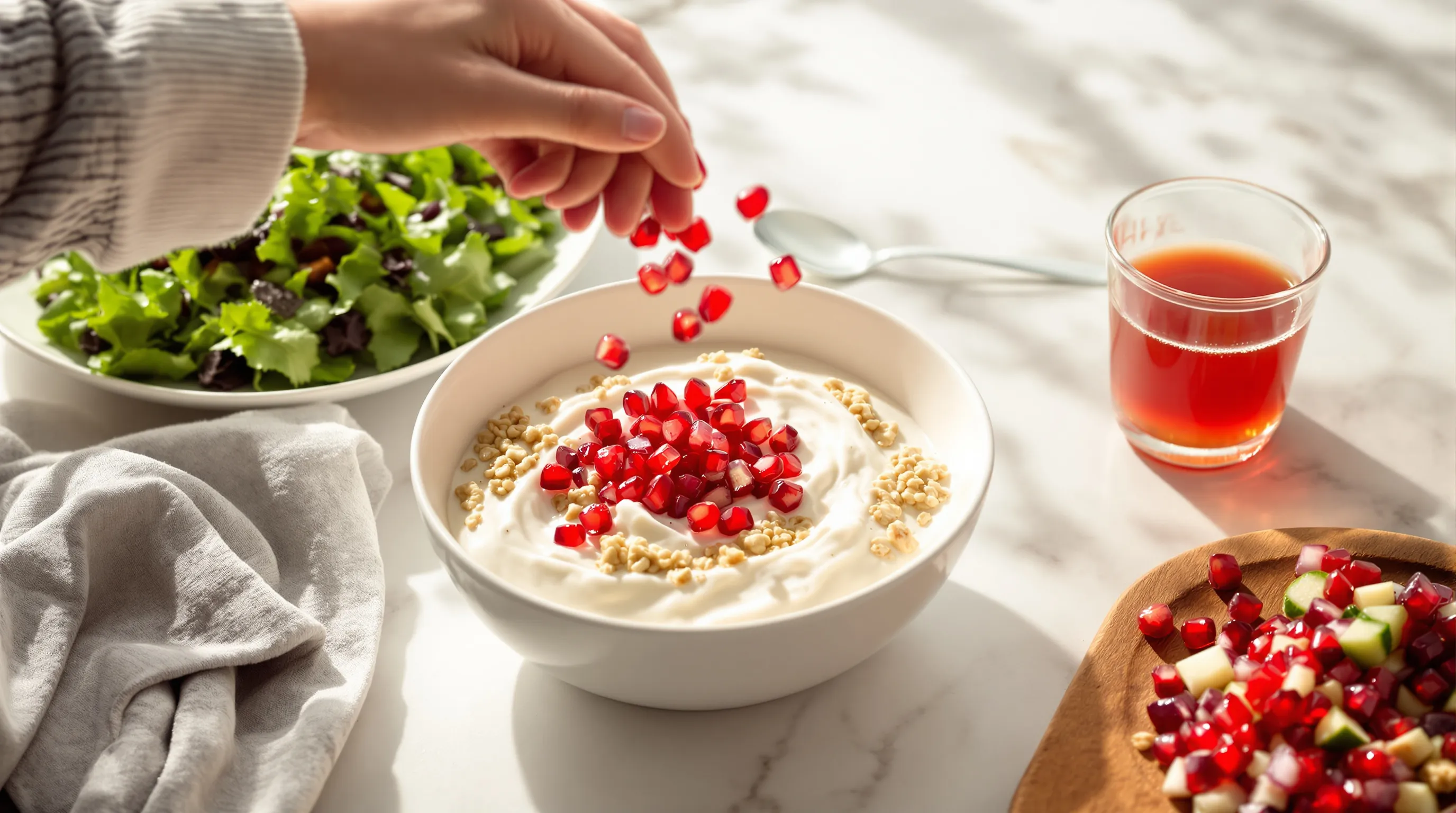
- Arils: 1/2–1 cup per day works well for most people.
- Juice: 4–8 oz (120–240 ml), ideally with a meal.
You don’t need to hit these amounts daily. Aim for a few servings per week and build from there. Consistency beats perfection.
Quick, Tasty Ideas (Sweet And Savory)
- Sprinkle on yogurt, cottage cheese, or oatmeal for color and crunch.
- Toss into salads with arugula, feta, and walnuts: or add to a quinoa bowl with chickpeas and herbs.
- Fold into salsa with diced cucumber, red onion, and lime: spoon over grilled fish or tofu.
- Blend a small splash of pomegranate juice into a vinaigrette with olive oil and Dijon.
- Add arils to a holiday cheese board: they brighten everything.
Try one idea this week. Save your favorite combo for busy days.
Smart Shopping, Storage, And Prep
Picking A Good Pomegranate
Choose fruits that feel heavy for their size (more juice), with firm, taut skin and no soft spots. Color can vary from pink-red to deep burgundy, that’s okay. The weight tells you more than the shade.
No-Mess Seeding And Storage Tips
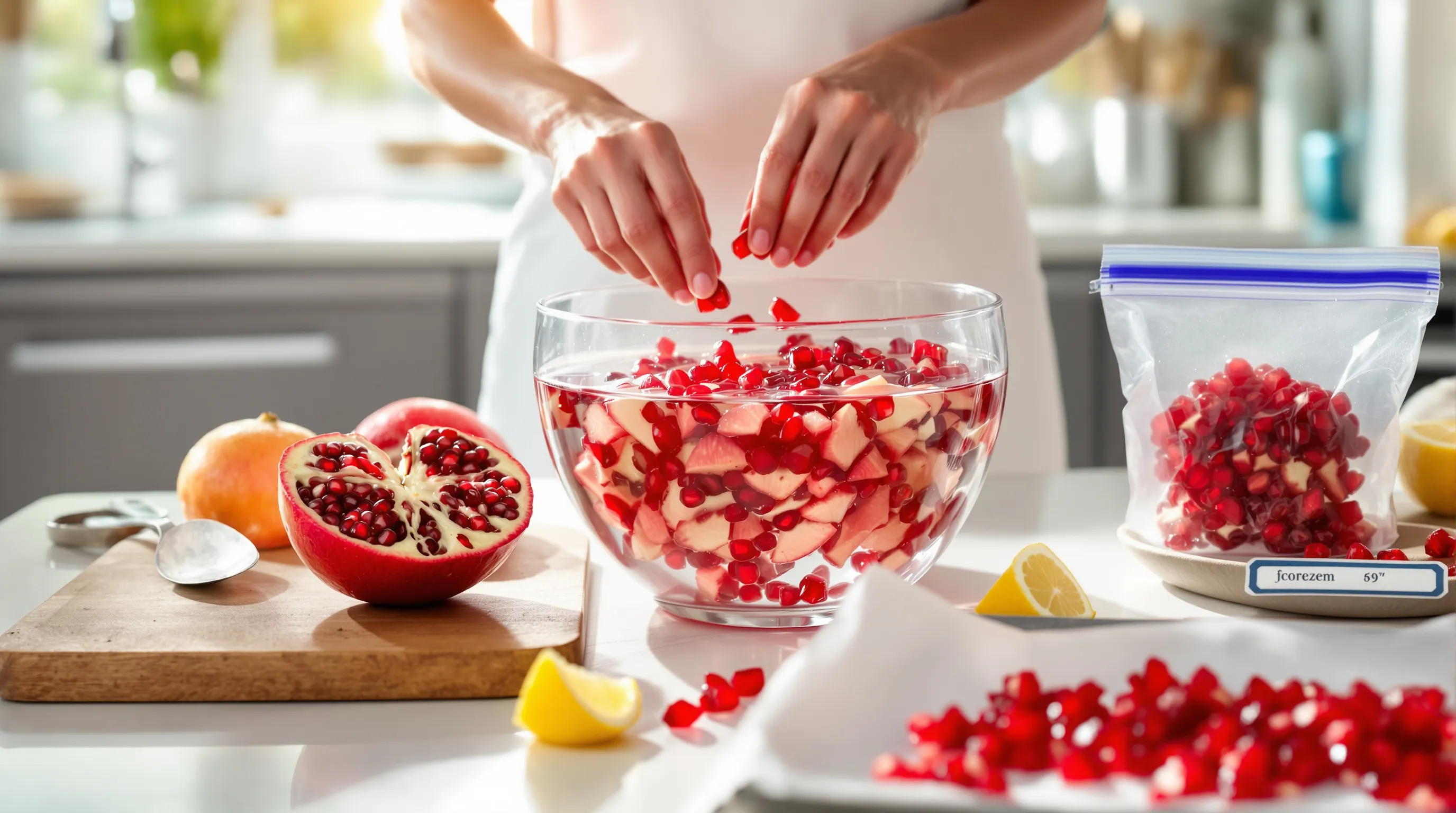
- Score the peel around the middle, then gently pull apart into sections.
- Submerge sections in a bowl of water: nudge out the arils with your fingers. Pith floats, arils sink. Drain and done.
- Store arils in the fridge for up to 5 days in an airtight container.
- Freeze extras in a single layer, then bag, great for smoothies or quick toppings.
Bonus: a small squeeze of lemon over stored arils keeps them tasting bright.
Who Should Be Cautious
Medication Interactions And Sensitivities
Concentrated pomegranate juice or extracts can interact with certain medications (a caution similar to grapefruit for some blood pressure or cholesterol drugs). If you take prescription meds or multiple supplements, check with your clinician before using high-dose products. A few people may notice GI upset or, rarely, allergy. Pregnant individuals or those with chronic conditions should avoid high-dose supplements unless cleared by a professional. Food-level intake, arils or modest juice, appears safe for most people.
Conclusion
So, are pomegranates good for you? Absolutely. The combo of fiber, vitamin C, potassium, and potent polyphenols like punicalagins and anthocyanins makes them a smart, enjoyable add to your routine. Think steady heart support, gentler inflammation, and potential boosts for metabolism and brain health, no extremes, just consistent, food-first wins.
Start simple: 1/2 cup arils on yogurt, or a 4–8 oz splash of juice with lunch. If you’re considering supplements, loop in your clinician. And if you want more easy wellness wins like this, explore the guides on HowAboutHealthy.com, practical, encouraging, and built for real life.