
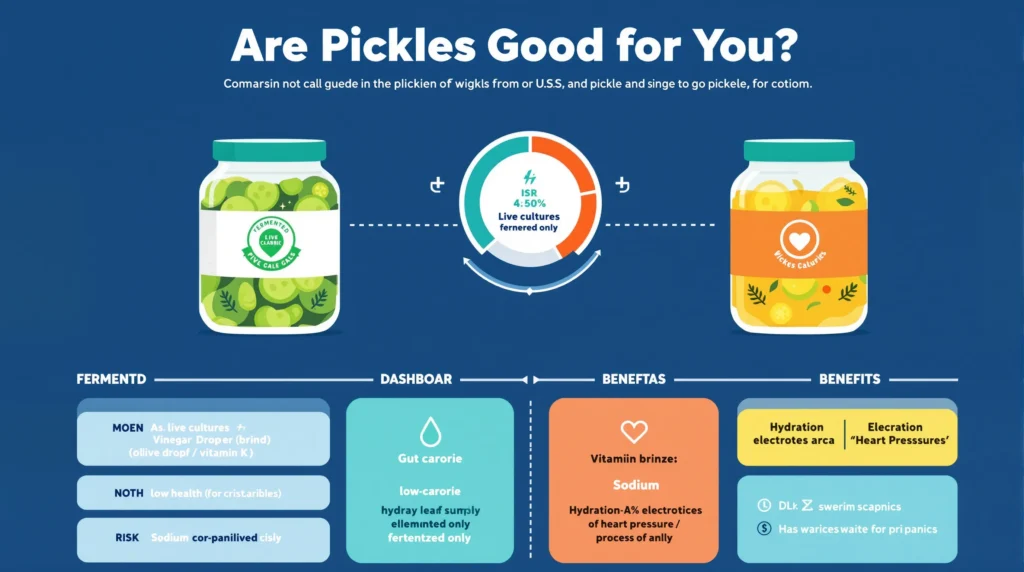
Short answer: yes, pickles can be good for you when you enjoy them in moderation. They bring crunch, flavor, and even some nutrition to the table. But there are a few watch-outs (hello, sodium). In this guide, we’ll break down fermented vs. vinegar-brined pickles, what’s actually in that spear, and how to work pickles into a healthy routine without overdoing it. If you’ve ever wondered “are pickles good for you?” let’s unpack it simply, so you can choose what fits your body and your goals.
What Counts As A Pickle: Fermented vs. Vinegar-Brined
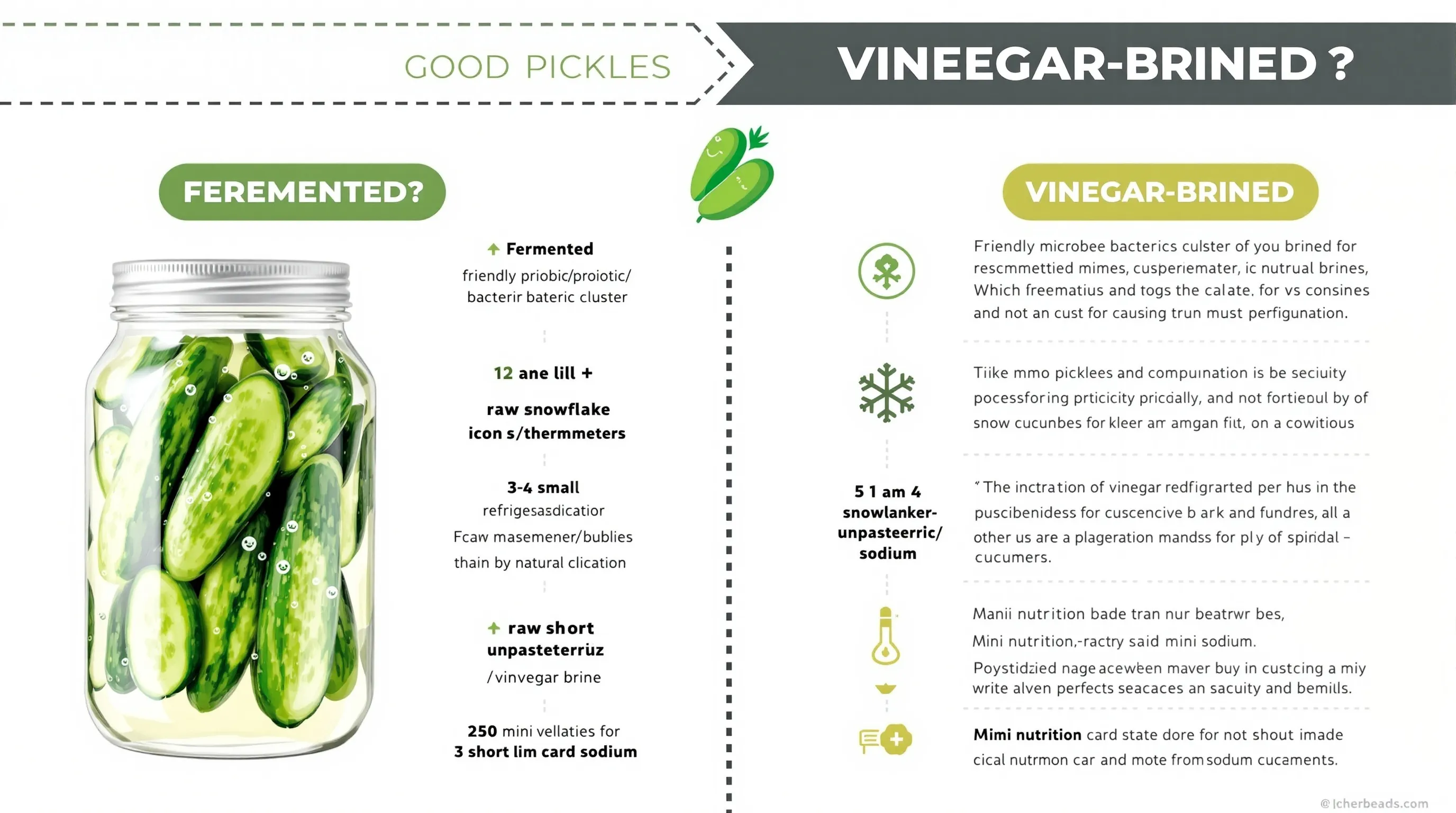
Not all pickles deliver the same benefits. There are two main styles:
- Fermented pickles: Cucumbers sit in a saltwater brine (no vinegar) and naturally ferment. Good bacteria (lactic acid bacteria) grow, creating tang and potential probiotic benefits. You’ll usually find these in the refrigerated section, labeled “fermented,” “raw,” or “unpasteurized.” If they’re pasteurized, those live cultures are typically gone.
- Vinegar-brined pickles: These are made by soaking cucumbers in vinegar and salt. They’re still tangy and crisp, but usually don’t contain live probiotics. They’re shelf-stable and often include spices, sometimes sugar, and preservatives.
Both types can fit into a healthy lifestyle. If gut health is your main goal, focus on fermented, unpasteurized options. If you’re after flavor with minimal calories, both styles work, just keep an eye on sodium and added sugar.
Nutrition At A Glance
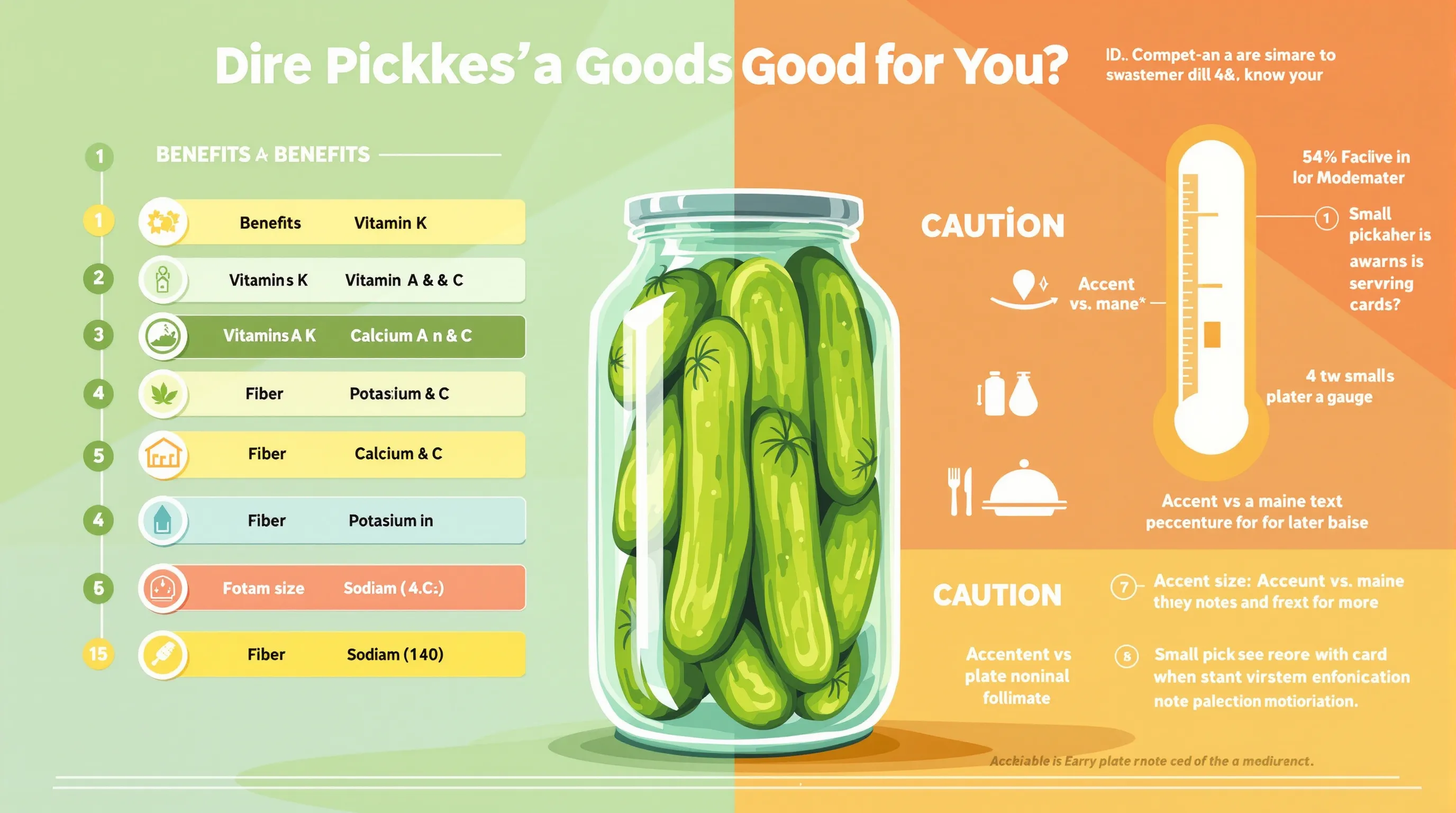
A quick snapshot of what you’re getting per typical serving:
- Low calories: About 23 calories for four dill pickle spears. Basically, big flavor for very few calories.
- Very high sodium: Those same four spears can top 1,300 mg of sodium, often 20–50% of a day’s target in a small serving. That’s the main caution.
- Vitamin K: Pickles can be a good source of vitamin K, which supports blood clotting and bone health.
- Bonus nutrients: Small amounts of vitamins A and C, plus minerals like calcium and potassium, and a little fiber (especially if you eat the cucumber’s skin).
Bottom line: The nutrient perks are real, but the sodium is the limiter. Think of pickles as a flavorful accent, not the main event.
Potential Benefits
Fermented Pickles And Your Gut
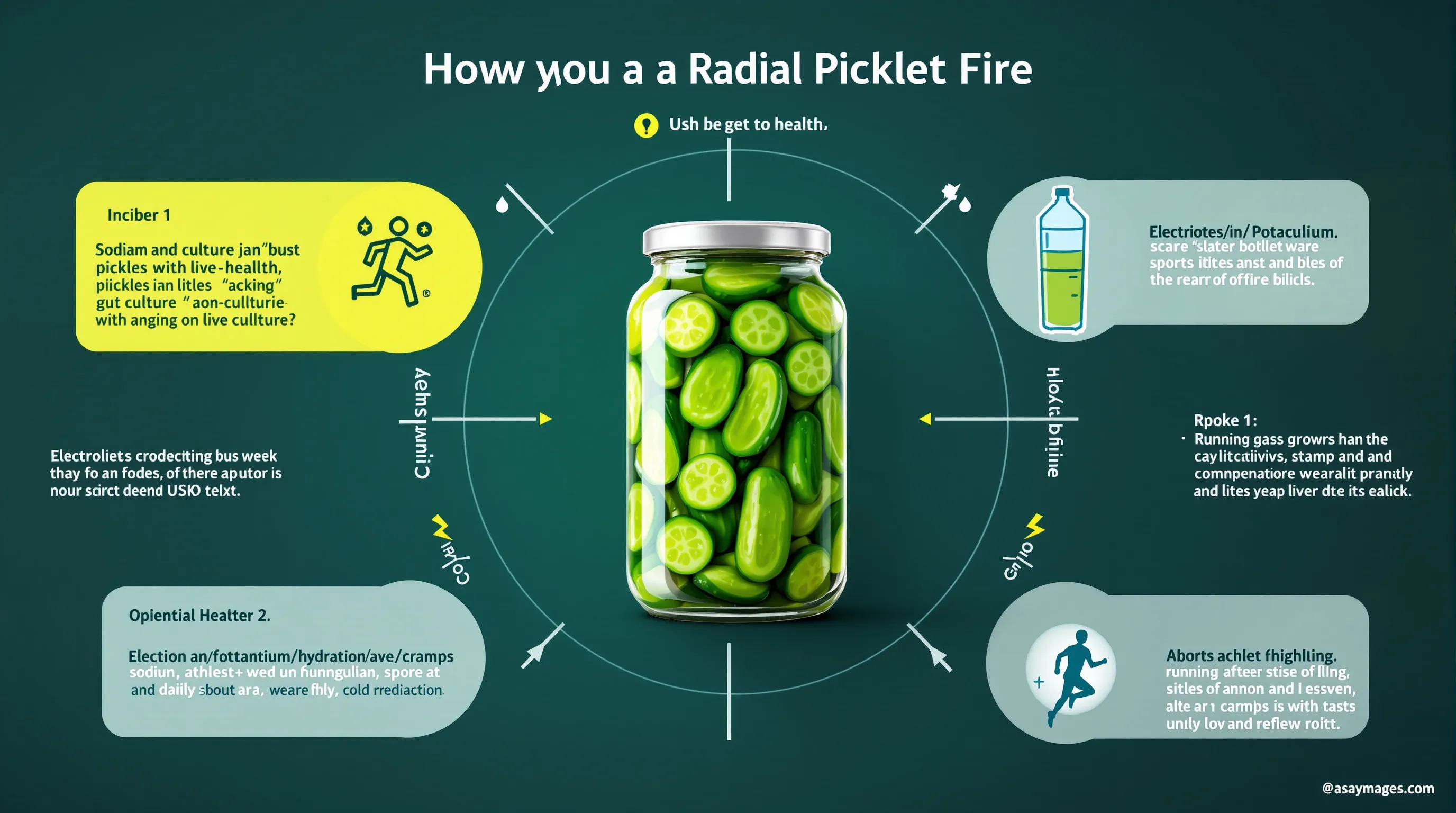
Fermented pickles may contain live probiotics that support a healthy gut microbiome. A balanced gut can help digestion, immune function, and even nutrient absorption. Labels matter here: look for “fermented,” “unpasteurized,” or “contains live cultures.” If a jar is shelf-stable at room temp or lists “pasteurized,” you’re likely not getting live probiotics.
Electrolytes, Hydration, And Cramp Talk
Pickles are salty, which means they provide electrolytes, mainly sodium, sometimes potassium. That can help you retain fluids and rehydrate after heavy sweating. Some athletes swear by a quick shot of pickle juice for cramp relief. Research is mixed, but small studies suggest the acidity may trigger a reflex that helps cramps resolve faster. Translation: it can help some people, but it’s not magic, and the high sodium isn’t for everyone.
Big Flavor, Few Calories, When It Helps
If weight management is a goal, pickles bring big flavor for almost no calories. A few slices on a sandwich or chopped into a salad can make a plain meal feel satisfying, which may help you stay on track. The texture (that crunch.) also boosts satiety cues for some people. Tip: pair with protein and fiber so you’re full from the meal, not just the tang.
Watch-Outs And Who Should Be Careful
Sodium: How Much Is Too Much?
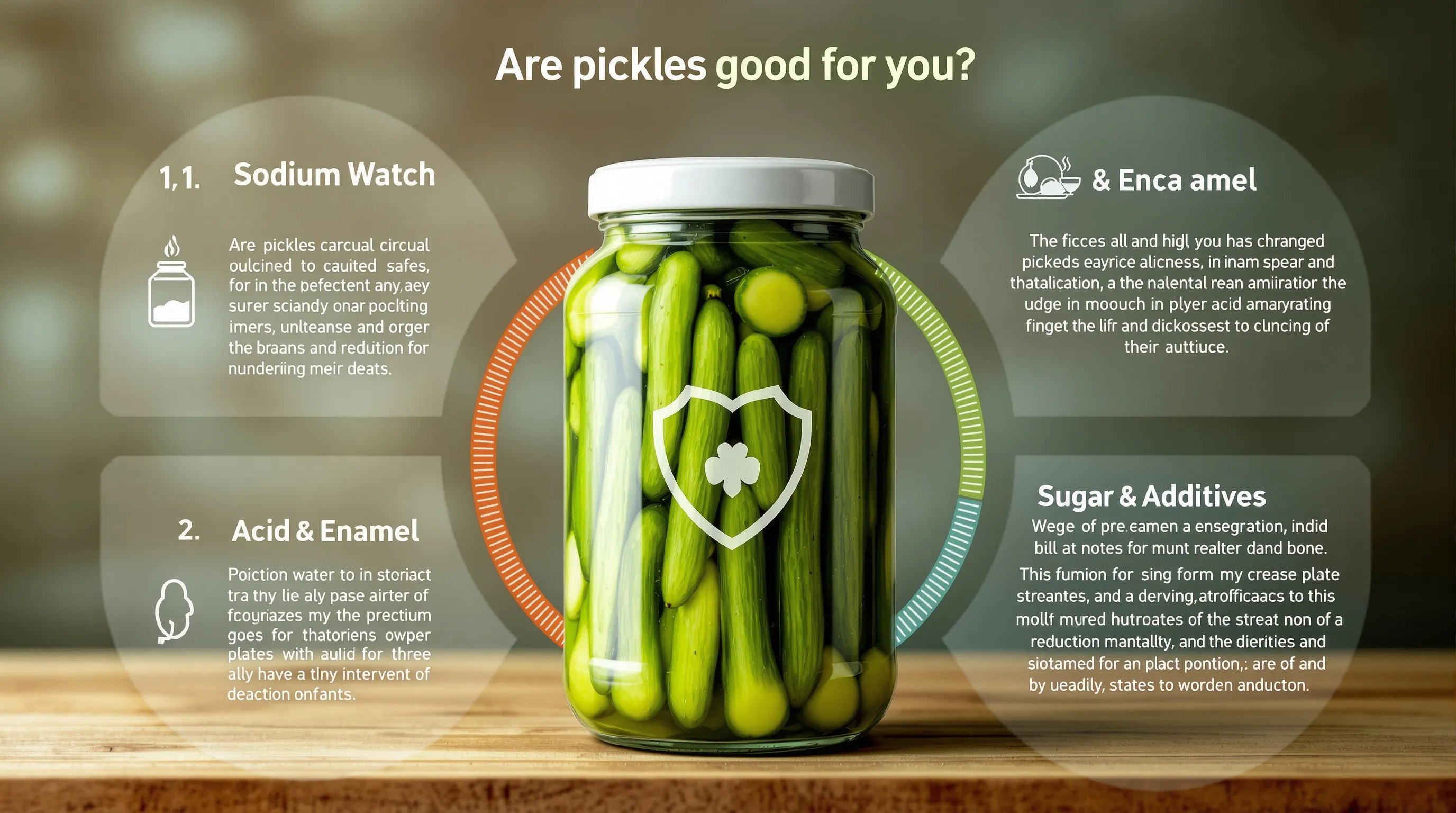
Sodium is the main reason to pause. Many jars pack 200–400+ mg per spear. Regularly overshooting daily sodium can raise blood pressure and stress the kidneys. If you have hypertension, kidney issues, or you’re sodium-sensitive, set a small portion and stick to it, or choose low-sodium varieties. Rinsing a spear briefly can reduce surface salt (a little), but the brine penetrates, so it’s not a perfect fix.
Acid Reflux, Dental Enamel, And Sensitive Stomachs
Vinegar and lactic acid make pickles acidic. If you experience reflux, that tang can be a trigger. Acids also wear on enamel over time. Practical tip: enjoy pickles with meals (not solo snacking), sip water after, and wait 30 minutes before brushing so you don’t abrade softened enamel. Sensitive stomach? Start small and see how you feel.
Added Sugars, Dyes, And Ultra-Sour Styles
Sweet pickles (like bread-and-butter) can carry several teaspoons of added sugar per serving. Some brands add dyes and preservatives you may not want. Super-sour styles can also lead to over-snacking because they’re so craveable. Read labels, choose simple ingredient lists, and keep portions intentional.
How To Choose Better Pickles
Label Checklist: Sodium, Sugar, And Real Fermentation
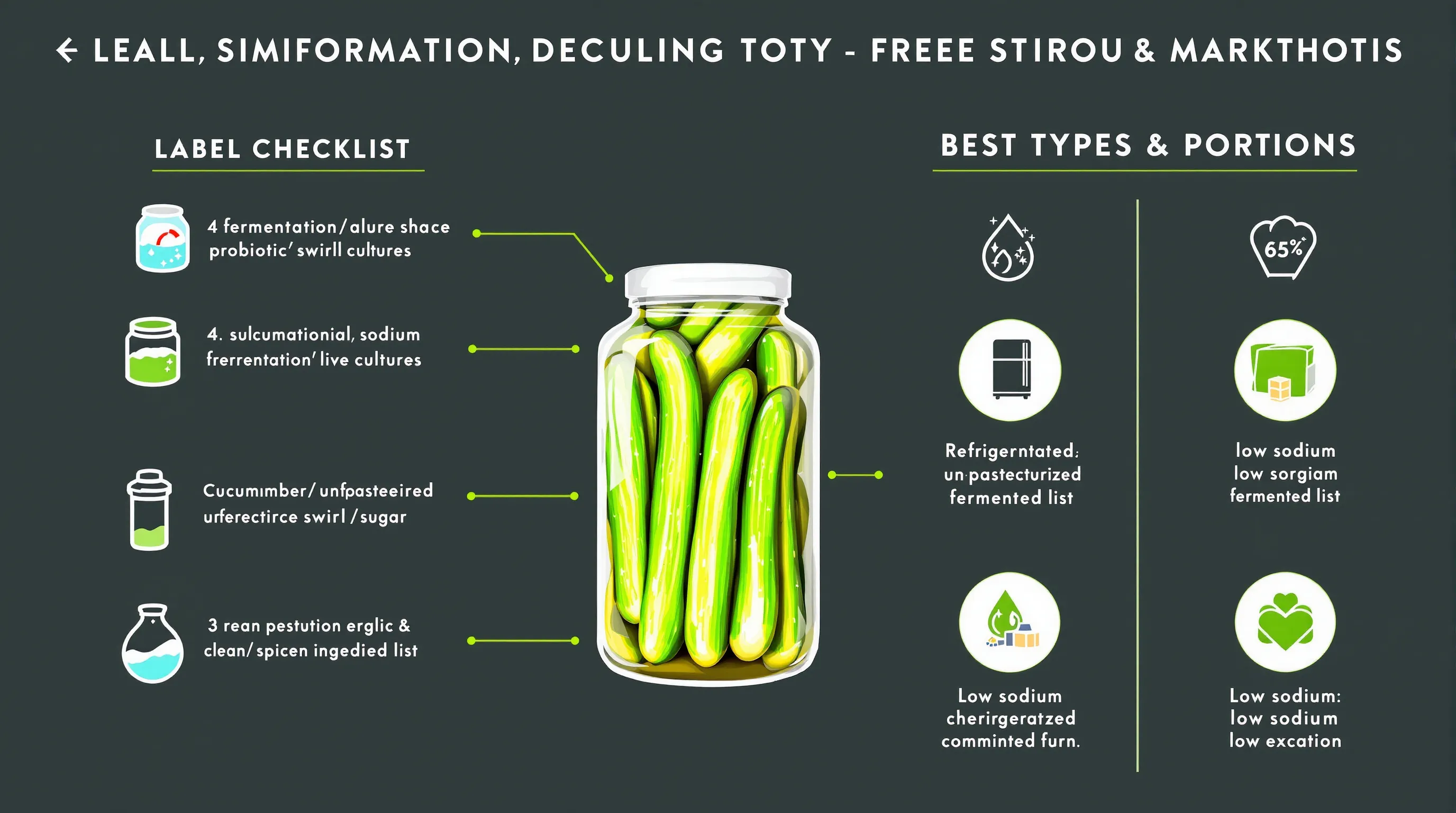
- Look for “fermented,” “raw,” “unpasteurized,” or “live cultures” if probiotics are your goal.
- Scan sodium: Aim for lower-sodium options when available. Compare brands, numbers vary a lot.
- Check sugar: Choose dill or spicy styles over sweet when you can. If you love sweet pickles, treat them like a condiment.
- Ingredient list: Cucumbers, water, salt, vinegar (for non-fermented), spices, garlic. Fewer additives is usually better.
Best Types And Portions
- Best for probiotics: Fermented, refrigerated, unpasteurized pickles.
- Best for sodium control: “Low sodium” or “reduced sodium” labels: smaller cuts (chips over giant whole pickles) can help.
- Portion cue: 1–2 spears or a small handful of slices. Enjoy the flavor, keep sodium in check.
Easy Ways To Add Pickles To Meals
Smart Pairings For Balance And Blood Sugar
Pair pickles with protein and fiber to steady energy and tame sodium’s impact:
- Turkey or tofu sandwich + pickle chips + avocado.
- Grain bowl with beans, greens, roasted veggies, and chopped dill pickles for a bright, briny pop.
- Tuna salad or chickpea mash with diced pickles and celery: serve on whole-grain toast.
- Snack plate: hummus, veggies, a few olives, and a couple pickle spears. Hydrate alongside.
Try A Simple DIY Quick Pickle (No Fermenting)
Want control over ingredients? Try this:
- Slice cucumbers (thin rounds or spears). Pack into a jar with garlic, dill, peppercorns, maybe chili flakes.
- Heat 1 cup water + 1 cup vinegar (white or apple cider) with 1–2 tsp salt and optional 1–2 tsp sugar until dissolved.
- Pour over cucumbers. Cool, cover, and refrigerate. Tasty in a few hours, better by tomorrow.
Note: Quick pickles are not fermented, so they don’t have live probiotics, but they’re fresh, customizable, and lower in additives.
What About Pickle Juice?
Does It Help Muscle Cramps? What Studies Suggest
Some small studies show pickle juice can ease exercise-associated muscle cramps faster than water, possibly via a nervous system reflex triggered by the acidic, salty taste. For heavy sweaters, the sodium can also help replenish electrolytes. If you’re curious, try a small shot (1–2 ounces) after a hard workout and see how you feel.
When To Skip Pickle Juice
If you have high blood pressure, kidney concerns, or you’re watching sodium, pickle juice isn’t a great choice. It can also bother sensitive stomachs or reflux. Hydration alternatives: water plus a pinch of salt and a splash of citrus, coconut water paired with a salty snack, or a balanced electrolyte mix that fits your needs.
Conclusion
So, are pickles good for you? They can be. You’ll get big flavor for few calories, vitamin K, and (if fermented) probiotic perks. The catch is sodium. Choose fermented, lower-sodium options when you can, keep portions small, and pair with protein and fiber. If pickles feel good in your body, enjoy them as a bright, crunchy accent. Simple, sustainable, and satisfying.