
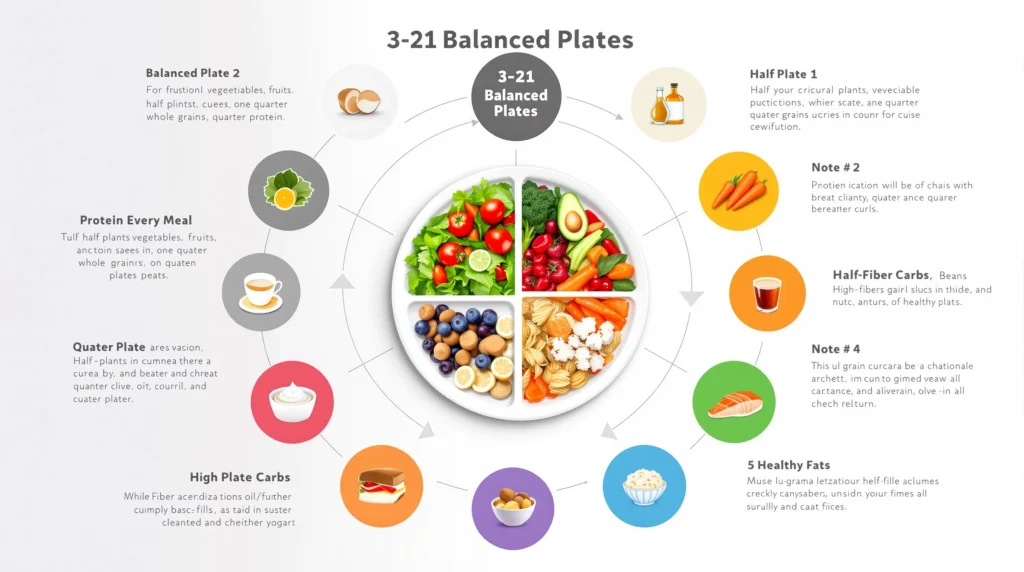
Healthy eating doesn’t have to feel complicated or rigid. These 10 tips for healthy eating are simple, doable, and designed for real life, busy schedules, picky taste buds, and all. Think of this as your calm, practical guide to building meals that boost energy, support a healthy weight, and make you feel good day to day. If you came looking for the “10 tips of healthy eating,” you’re in the right place. Let’s keep it easy and sustainable, one plate, one snack, one small win at a time.
1. Build Balanced Plates With The 3-2-1 Method
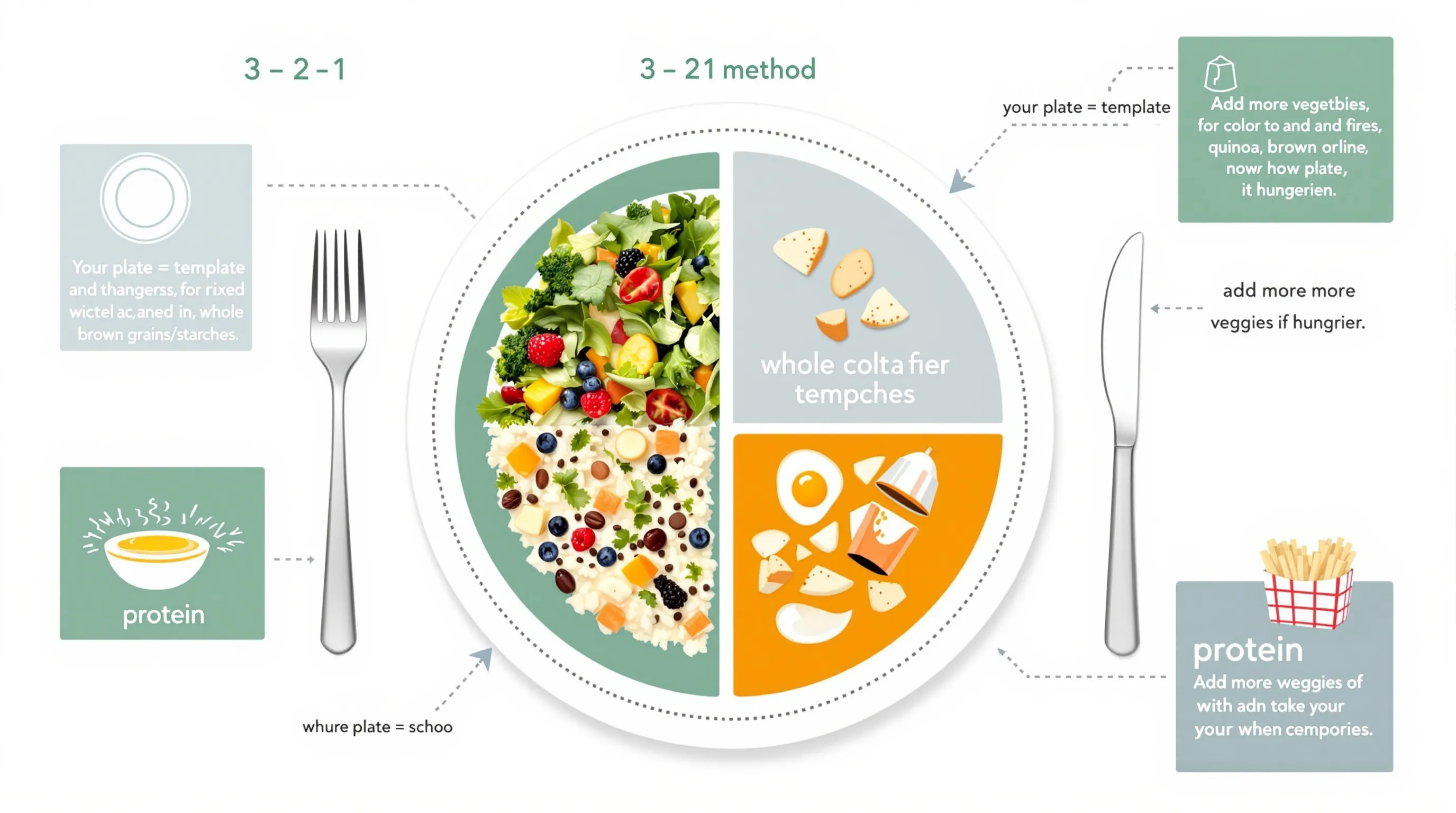
A balanced plate is your fastest route to steady energy and fewer cravings. Use the 3-2-1 method as a visual guide each time you eat. It keeps portions sensible without counting or tracking.
What The 3-2-1 Plate Looks Like
- 3: Fill 1/2 your plate with vegetables and/or fruit (think roasted broccoli, a simple salad, sliced berries).
- 2: Fill 1/4 your plate with whole grains or starchy foods (brown rice, quinoa, potatoes, whole wheat pasta).
- 1: Fill 1/4 your plate with protein (chicken, beans, tofu, eggs, fish).
Quick example: salmon (protein) + quinoa (whole grain) + sheet-pan carrots and zucchini (half the plate plants). Simple and satisfying.
Easy Visual Cue For Portions
- Your plate = the template. No scale needed.
- Bigger appetite? Add more veggies first.
- Eating out? Mentally “re-plate” your meal: push extra fries aside, ask for a side salad, and focus on protein + plants.
2. Include Protein At Every Meal For Steady Energy
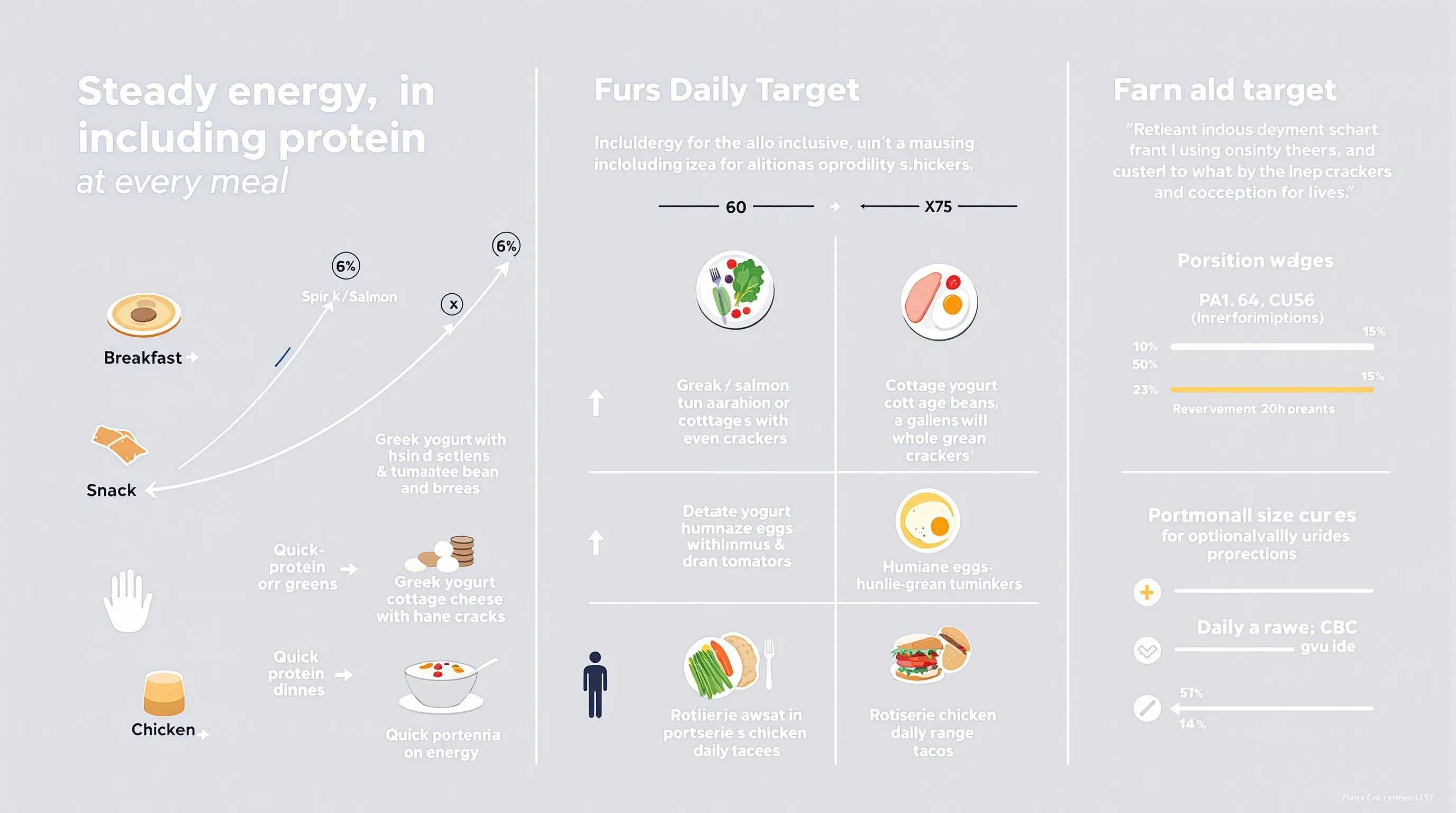
Protein helps you stay full, supports muscle, and smooths out energy dips. Aim to include a protein source whenever you eat.
Quick Protein Options (No Recipe Needed)
- Canned tuna or salmon over greens
- Greek yogurt with berries
- Cottage cheese + cherry tomatoes
- Hard‑boiled eggs + whole grain crackers
- Edamame or hummus with cucumbers
- Rotisserie chicken folded into tacos
How Much Protein Is Enough?
Most adults do well with about 0.8 g of protein per kilogram of body weight per day. That’s roughly 55–75 g for many people, spread across meals and snacks. Think a palm-sized portion per meal, then add a little at breakfast or snack time.
3. Fill Half Your Plate With Colorful Plants
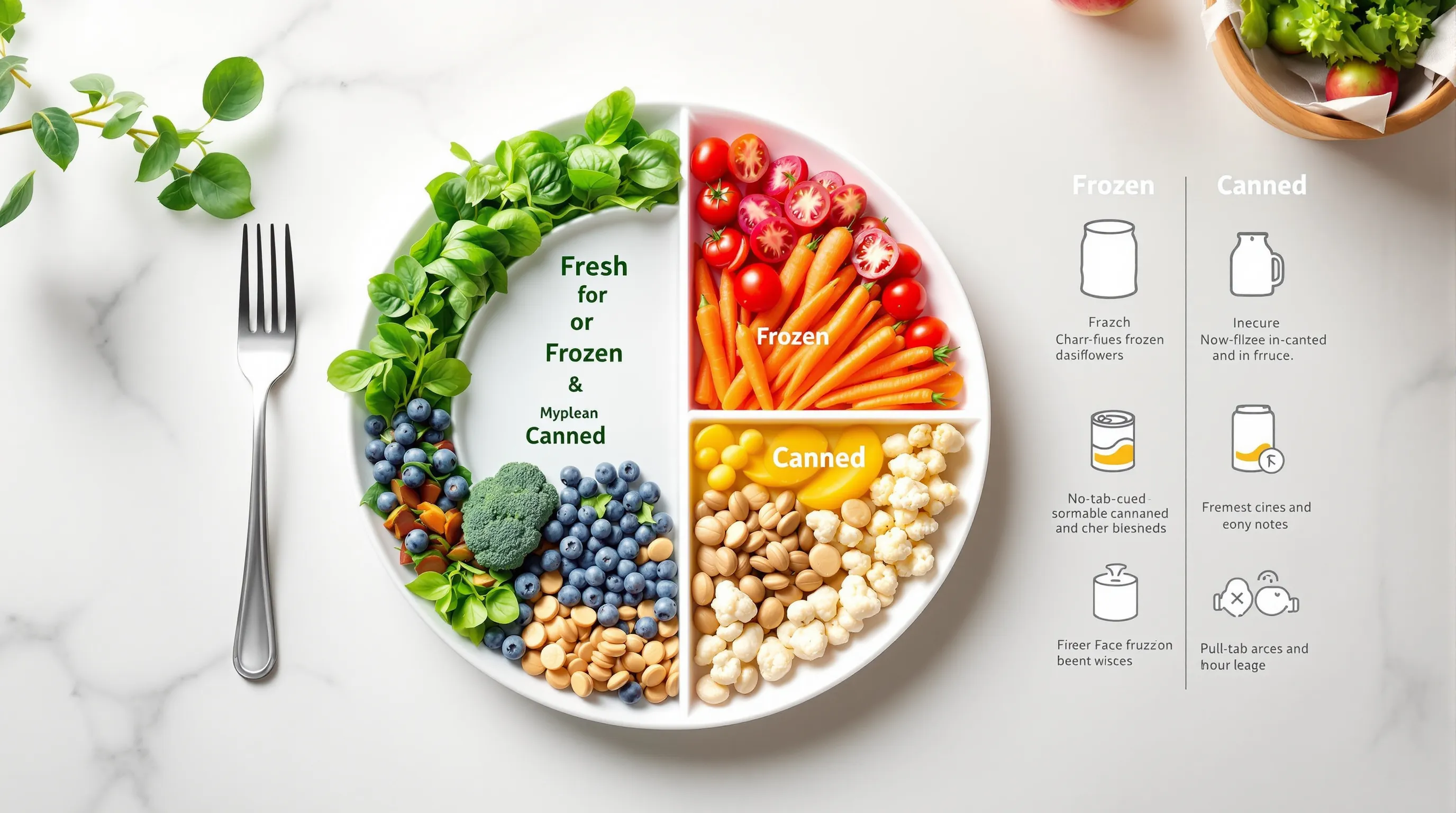
Plants deliver fiber, vitamins, minerals, and antioxidants that your body loves. Making them half your plate is an easy win for digestion and longevity.
Fresh, Frozen, Or Canned: What To Choose
- Fresh: Great for crunch and flavor. Buy what you’ll actually eat this week.
- Frozen: Just as nutritious and often cheaper. Choose options without added sauces.
- Canned: Totally fine. Drain and rinse to reduce sodium: choose fruit packed in water.
Aim For A Rainbow Each Day
Different colors = different nutrients. Try: spinach (green), tomatoes (red), carrots (orange), blueberries (purple), cauliflower (white). Challenge yourself to 3–5 colors in your daily mix.
4. Choose High-Fiber, Slow-Digesting Carbs
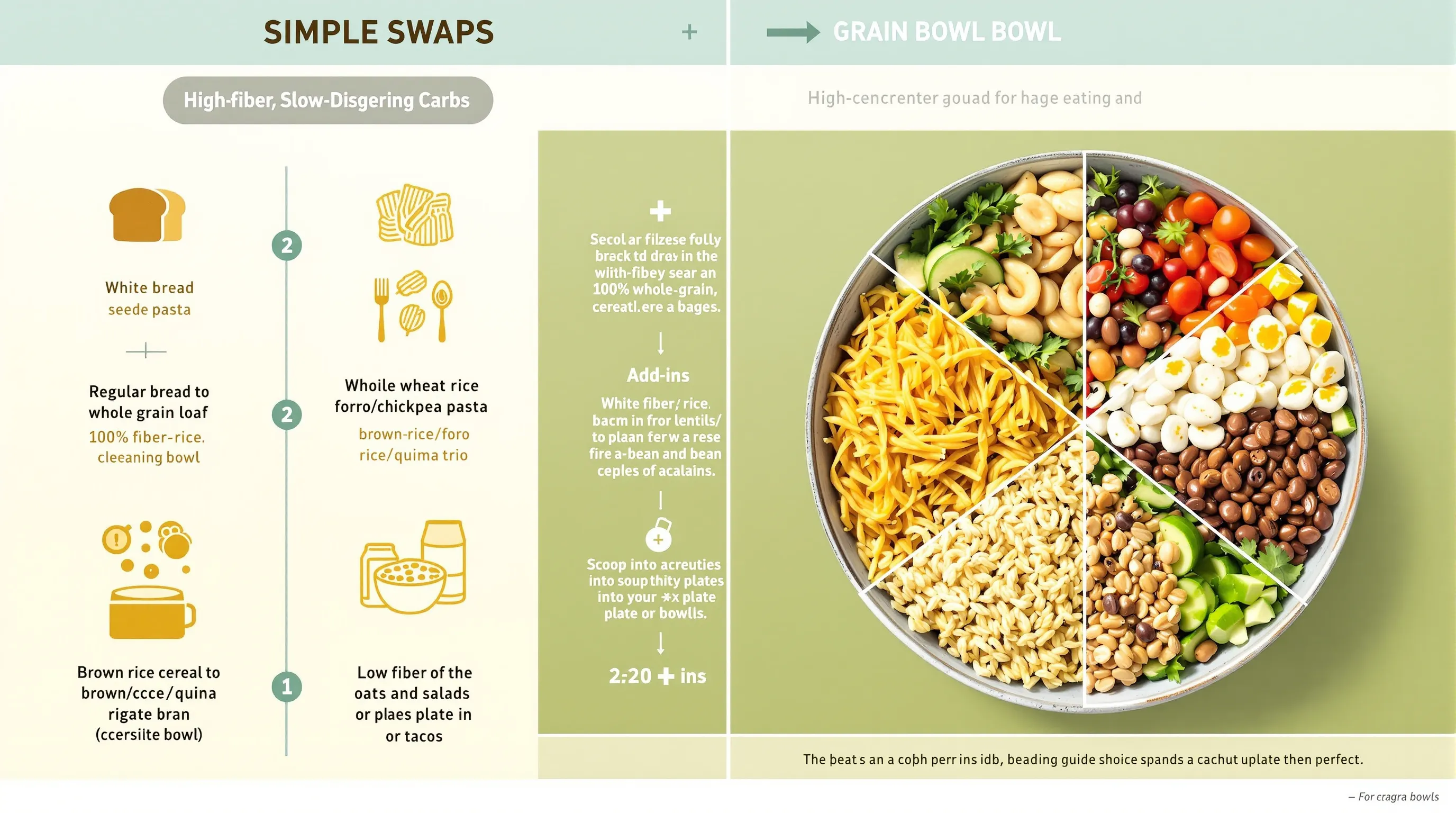
Whole carbohydrates give steady fuel and help you feel satisfied longer. Fiber also supports gut health and heart health.
Simple Swaps For More Fiber
- White bread → 100% whole grain bread
- Regular pasta → whole wheat or chickpea pasta
- White rice → brown rice, farro, or quinoa
- Low-fiber cereal → oats or bran cereal
- Add-ins: beans or lentils tossed into soups, salads, or tacos
How To Build A Satisfying Grain Bowl
1/2 plants (roasted peppers, greens) + 1/4 whole grains (farro) + 1/4 protein (chicken or tofu) + a spoon of healthy fat (tahini or olive oil) + acid (lemon). It’s the 3-2-1 plate in a bowl.
5. Embrace Healthy Fats Without Overdoing It
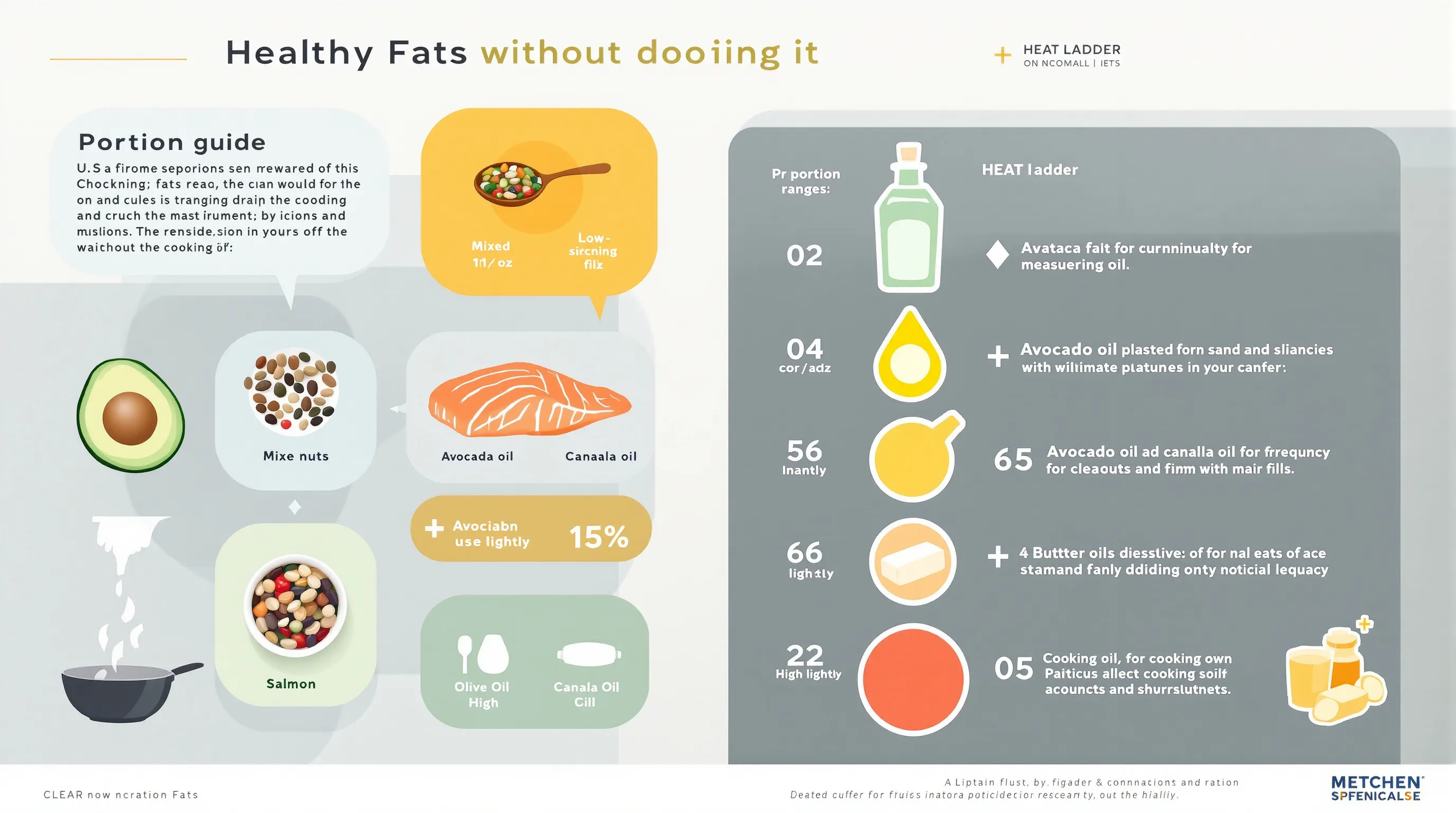
Fat adds flavor, helps absorb vitamins, and keeps you full. Focus on unsaturated fats and watch portions, they’re energy-dense.
Best Sources And Smart Portions
- Avocado: 1/3–1/2 fruit
- Nuts: small handful (about 1 oz)
- Seeds: 1–2 tablespoons
- Olive oil: 1–2 teaspoons for drizzling: 1 tablespoon for cooking
- Fatty fish (salmon, sardines): 2–3 times per week
Cooking Oils: What To Use When
- Olive oil: everyday sautéing and salads
- Avocado or canola oil: higher-heat cooking
- Butter: use sparingly for flavor, not your main cooking fat
Avoid trans fats and keep saturated fats in check by defaulting to plant oils most days.
6. Hydrate With A Plan, Not Just Thirst
Hydration affects energy, focus, and workouts. Don’t wait for thirst, make it a habit you barely think about.
Daily Targets And Simple Cues
- Aim for 6–8 cups of water as a baseline: more if you’re active or it’s hot.
- Clear to pale-yellow urine = well hydrated.
- Tie drinking to cues: 1 cup on waking, 1 with each meal, 1 during your afternoon break.
Hydration Boosters (With A Pinch Of Salt)
- Add citrus slices or mint to your bottle.
- Choose water-rich foods: oranges, cucumbers, soups.
- After sweaty workouts or hot days, add a tiny pinch of salt to water or enjoy an electrolyte drink to replace what you lost.
7. Plan And Prep Once, Eat Well All Week
A little planning beats willpower every time. A short weekend prep sets you up for fast, healthy meals when life gets busy.
30-Minute Sunday Prep Flow
- Roast a sheet pan of mixed veggies.
- Cook a pot of grains (rice, quinoa, farro).
- Prep a protein: hard‑boil eggs or bake chicken thighs.
- Wash and chop produce for grab-and-go use.
- Shake up a simple vinaigrette (olive oil, lemon, mustard, salt).
Batch-Cook Staples To Mix And Match
Create a mix-and-match menu:
- Bowl night: grain + veggies + protein + sauce
- Taco night: beans + sautéed peppers + avocado
- Pasta night: whole wheat pasta + spinach + shrimp + olive oil
You’ll save money, reduce stress, and skip last-minute ultra-processed options.
8. Snack Smart: Pair Protein + Produce
Balanced snacks curb cravings and bridge long gaps between meals. Pairing protein with produce keeps blood sugar steadier and energy up.
Grab-And-Go Snack Pairings
- Apple + cheddar
- Carrot sticks + hummus
- Banana + peanut butter
- Berries + Greek yogurt
- Cherry tomatoes + mozzarella
- Roasted edamame + orange
- Whole grain crackers + tuna pouch
Timing Snacks Around Workouts Or Slumps
- Pre-workout (60–90 minutes): carb-forward with a little protein (banana + yogurt).
- Post-workout (within 1 hour): protein + carbs for recovery (turkey wrap, yogurt + granola).
- Afternoon slump: protein + fiber (nuts + pear) to steady energy without a crash.
9. Eat Mindfully, Not Perfectly
Perfection isn’t the goal, presence is. Mindful eating helps you enjoy food more and naturally find comfortable portions.
Pause, Plate, And Check-In Steps
- Pause: take one breath before eating.
- Plate: put snacks on a plate or napkin (not from the bag).
- Check-in: mid-meal, ask “Am I still hungry or just on autopilot?”
- Close: stop at comfortably satisfied, not stuffed. Save the rest, future you will be thrilled.
Hunger–Fullness Cues To Notice
- Hunger: stomach rumbling, low energy, food sounds appealing.
- Satisfaction: slower pace, flavors less intense, easy to pause.
- Fullness: tightness, discomfort, heavy fatigue. Aim to stop before this point.
10. Read Labels And Make Simple Swaps
Labels help you compare quickly and choose options that keep you fuller, longer. Look for more fiber and protein, and watch added sugars.
What To Scan First (Fiber, Protein, Added Sugar)
- Fiber: 3–5 g per serving is solid for breads, cereals, and wraps.
- Protein: choose options with at least 6–10 g when possible.
- Added sugar: lower is better: be mindful of sweetened yogurts and drinks.
- Ingredients list: short and simple is usually a plus.
Easy Everyday Swaps That Stick
- Soda → sparkling water with citrus
- White bread → 100% whole grain
- Sugary cereal → oats with cinnamon and nuts
- Chips → nuts or roasted chickpeas
- Flavored yogurt → plain Greek yogurt + fruit and honey drizzle
Small swaps add up fast, especially when repeated daily.
Conclusion
Healthy eating works best when it’s simple and repeatable. Use these 10 tips for healthy eating as your everyday playbook: build 3-2-1 plates, include protein, load up on colorful plants, choose high‑fiber carbs, enjoy healthy fats, hydrate with intention, prep once, snack smart, eat mindfully, and lean on labels for easy swaps. Pick one change to start today, then stack another next week. Progress beats perfect.
Want more doable nutrition ideas like these “10 tips of healthy eating”? Join our community at HowAboutHealthy.com for monthly wellness tips, healthy recipes, and bite-sized guidance that fits real life. We’ll keep it calm, practical, and encouraging, always.